
The African Education Indaba 2025, held in Limbe, Cameroon, brought together over 150 participants from 14 countries—including Australia, Benin, Cameroon, Canada, Chad, Ghana, Kenya, Madagascar, Niger, Nigeria, Senegal, Sierra Leone, and Togo. Hosted by eBASE Africa and supported by the Education Endowment Foundation, this landmark event focused on the theme “Bridging the Attainment Gap: Transforming Education in Africa for the 21st Century.”
Over the course of three days, policymakers, educators, researchers, youth, members of civil society organisations and other advocates came together to co-create solutions, share evidence, and renew commitments to inclusive and data-driven educational reform. Through pre-conference workshops, engaging plenaries, and interactive side sessions, the Indaba reinforced the power of collaboration and context in shaping meaningful educational outcomes.
Pre-Conference Workshops: Co-Creating the Future of Education
 Group photo of participants of the Evidence Communication workshop.
1. Communicating Research Evidence
This workshop brought together communication units (CELCOM) from four partner government ministries — the Ministry of Basic Education, Ministry of Secondary Education, Ministry of Social Affairs, and the Ministry of Women’s Empowerment and the Family, the North West Regional Assembly (NWRA), alongside media outlets such as CRTV Web and The Guardian Post. The goal was to explore how communication can go beyond visibility to become a strategic tool for making our MoUs more actionable.
One key outcome was the mutual understanding established between eBASE and the CELCOM unit: eBASE gained insight into how CELCOM operates, while CELCOM developed a clearer understanding of eBASE’s vision. This exchange sparked the co-development of a 5-year roadmap centred on four pillars: capacity building, visibility, alignment, and the development of collaborative tools, such as a partnership playbook, to strengthen and streamline our collaboration. The playbook will also serve as a tool to ensure sustainability, especially during transitions in leadership or institutional power.
2. Advancing Research Ethics
This session convened stakeholders from education, health, and social sciences to assess the TREE (Transparent, Reproducible, and Ethical Evidence) framework, addressing the lack of standard ethical review practices in social science research and promoting inclusive, context-aware ethical evaluation.
3. Unlocking Data for Foundational Learning
This session brought together senior policymakers and researchers to reflect on how data can better inform foundational literacy and numeracy efforts. The session aimed to introduce the concept of Communities of Practice (CoPs), highlight the importance of data-driven decision-making, share models of successful data-focused CoPs, and facilitate visioning and planning for a national or regional CoP. A key outcome was the decision to create five regional clusters, each hosted by the Ministry of Basic Education in their respective regions. These clusters will bring together key education stakeholders to foster collaboration, data sharing, and evidence use. It was agreed that eBASE Africa will serve as the national secretariat, supporting coordination, documentation, and learning across the clusters. This marks an important step toward building a culture of trust, collaboration, and data use for improved foundational learning outcomes in Cameroon.
Conference Highlights: Spotlight Sessions & Panels
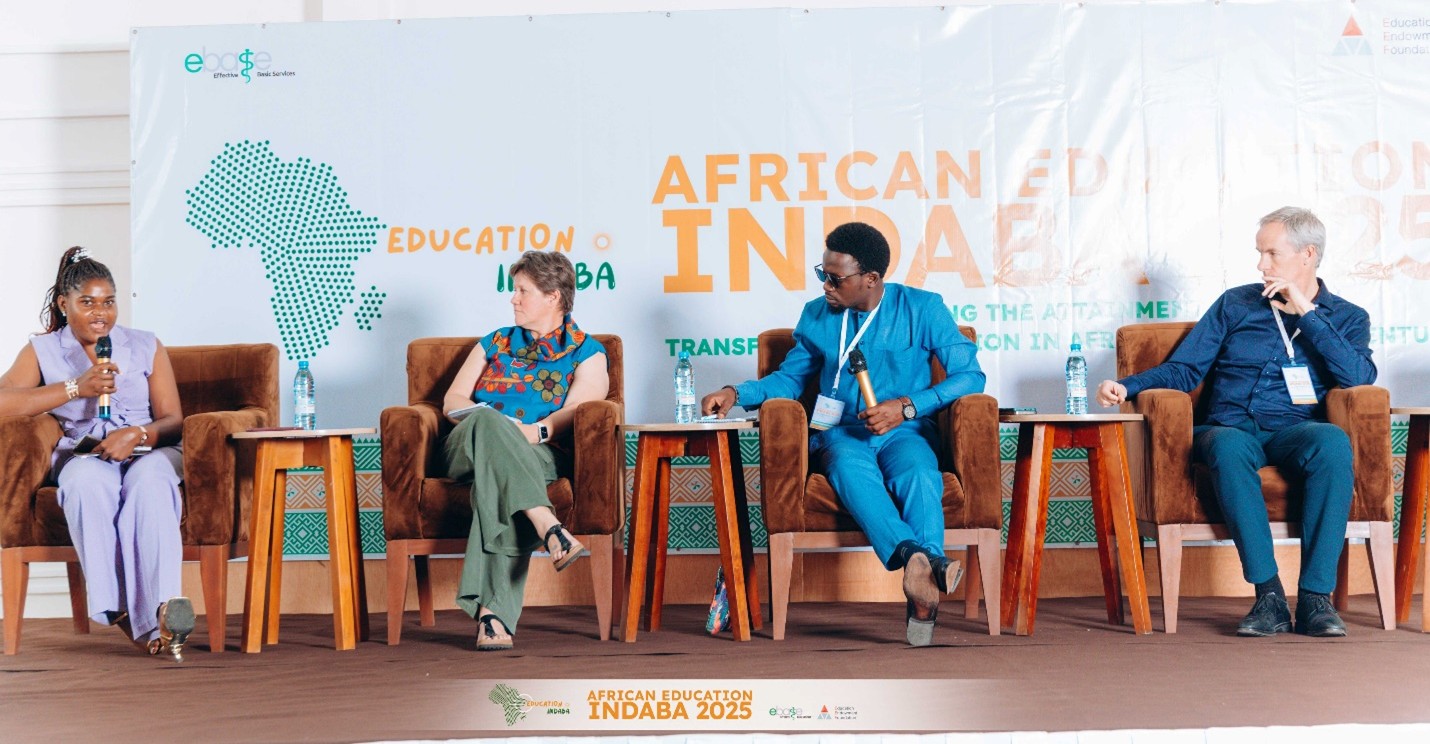 Myra Ndum, researcher at eBASE Africa, speaking at the Knowledge Mobilisation Panel
Digital & AI Tools in Education
Participants explored AI-assisted learning, smart classrooms, and offline digital tools reaching underserved learners. The Codebox Initiative and virtual labs, an innovation by the Cameroon Ministry of Secondary Education (MINESEC) illustrated the growing role of tech in education equity.
Teacher Professional Development
Educators shared research and strategies from Cameroon to Sierra Leone to modernize teaching through structured pedagogy, curriculum reform, and professional development.
Foundational Literacy and Numeracy (FLN)
Speakers tackled learning poverty, disability-inclusive resources, and AI tools for early learning. Rigobert Pambe’s work across West and Central Africa sparked important conversations on adapting education to rural realities.
Parallel Sessions: Making Evidence Work
 Nain Yuh Mirabel, Researcher and Program Manager at eBASE Africa, presenting on the REAP platform to the Youth during the Youth session.
Knowledge Mobilisation for Education Impact
This session explored how knowledge mobilisation can be more inclusive and actionable. One highlight focused on the major accessibility challenges in Cameroon’s national exams for students with disabilities, such as limited centres, insufficient accommodations, and safety issues. Proposed reforms included tripling accessible centres and introducing mandatory sign language services. Another presentation emphasised the gap between research and education policy in sub-Saharan Africa, urging better use of data in teacher training and curriculum reform. A cross-country initiative also shared success in using MOOCs (Massive Open Online Courses) and workshops to train researchers and policymakers on knowledge transfer tools like policy briefs and infographics. Key takeaways included the importance of organisational support, diversified formats, and ongoing mentorship.
Stakeholder Engagement
The session focused on key themes such as menstrual hygiene management (MHM), prison education, after-school clubs, and Second Chance Education for girls in conflict zones. Discussions emphasized community involvement, system strengthening, and youth empowerment.
Youth Engagement
This dynamic session brought together young people across the globe including students from the university of Buea to explore how youths can actively contribute to research and evidence use-not just as students but as change agents. It highlighted opportunities to create blogs, podcasts, TikTok videos, and social media trends that not only spark public interest in evidence but drive meaningful change. The session also introduced platforms like REAP (Responsive Evidence Systems for African Policy Needs) and AEN (African Evidence Network) as gateways to mentorship, access to resources, capacity sharing and networking. Youth, especially those from the university were urged to see research as a tool for meaningful change and not just a university requirement. One key outcome was the decision to establish an open youth forum to coordinate these activities, foster collaboration and sustain youth-led engagement in the evidence ecosystem. Attendees also reflected on how digital tools bridge the gap between researchers, decision-makers, and emerging professionals. Ideas such as skill-building workshops, digital storytelling, and strengthening links between academic institutions and policymaking spaces were proposed. The enthusiasm from young attendees underscored the need for a dedicated, open youth forum- one that channels youth creativity, fosters peer learning, and positions young people as vital contributors to evidence-informed decision making and knowledge mobilisation.

A section of the youth during the youth engagement session.
Side Event: Evidence Tori Dey
This standout session showcased indigenous storytelling as a vehicle for communicating research. Through drama, dialogue, and performance, Tori Dey brought evidence to life and underscored the cultural power of narrative.
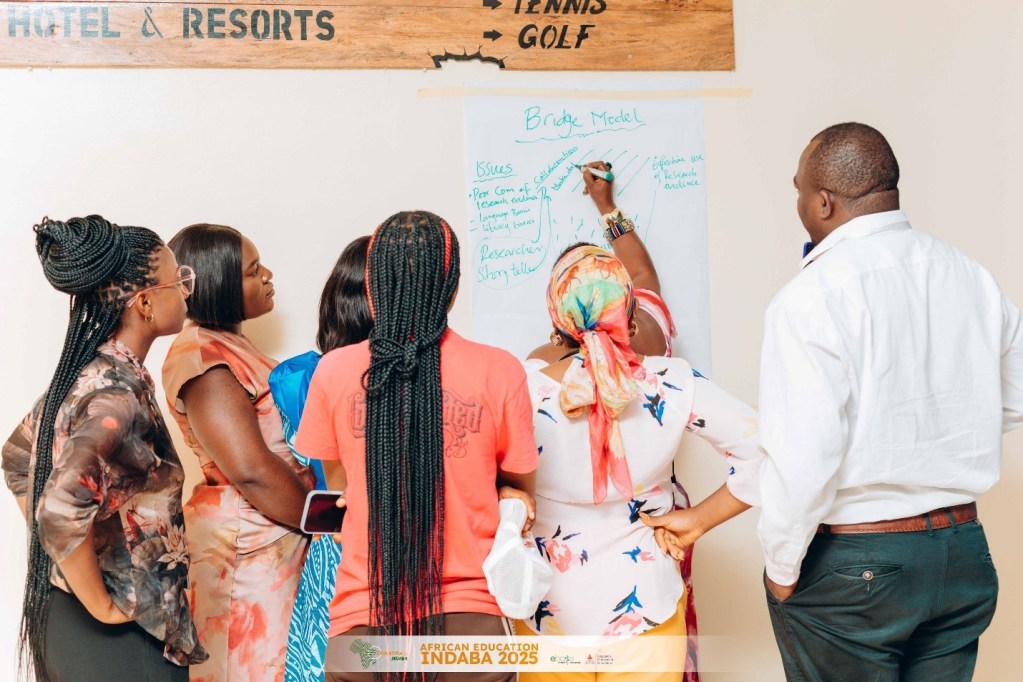
An interactive session between participants during the Tori Dey workshop
Key Takeaways
- Collaboration is the catalyst – Change happens when governments, researchers, and communities co-create solutions.
- Ethics must evolve – Social science research in Africa needs practical, context-sensitive ethical frameworks.
- Data should empower, not confuse – Disjointed data must be harmonised to inform inclusive education policies.
- Tech is a tool, not a Cure-All – AI and digital learning platforms are promising, but must be accessible and relevant.
- Youth are ready – Young professionals are eager to shape the evidence ecosystem; they need platforms and support.
- Storytelling is strategy – Indigenous storytelling, like Evidence Tori Dey, bridges research and community, making evidence felt, not just understood.
- FLN is the foundation – Without foundational literacy and numeracy, lifelong learning remains out of reach.
- Equity must be intentional – From MHM to disability inclusion, tailored approaches are essential for reaching every learner.
Conclusion
The African Education Indaba 2025 wasn’t just a gathering—it was a springboard for transformation. From the launch of new partnerships to the powerful Limbe Declaration, the Indaba affirmed that the future of African education lies in evidence, inclusivity, bold collaboration and leadership.
Stay connected and explore more at: www.ebaseafrica.org
About the author: Elanga Andrea, hailing from Yaoundé, Cameroon, is a multilingual individual fluent in French, English, and Bulu. As the Communications Officer at Effective Basic Services (eBASE) Africa, she plays a pivotal role in improving the livelihoods of underserved populations in Cameroon, Niger, Chad, and Nigeria through innovation and best practices.
Her expertise extends beyond communication, reaching into global evidence networks. She actively participates in the Cochrane Collaboration, the Joanna Briggs Collaboration, and the Africa Evidence Network (AEN).
Elanga Andrea has been a passionate advocate for World Evidence-Based Health Care Day since its inception and has contributed to developing the AEN Capacities Community of Practice.
Acknowledgements: The author(s) are solely responsible for the content of this article, including all errors or omissions; acknowledgements do not imply endorsement of the content. The author is grateful to Charity Chisoro and Julius Fenji for their guidance in preparing and finalising this article, as well as their editorial support.
Disclaimer: The views expressed in published blog posts, as well as any errors or omissions, are the sole responsibility of the author/s and do not represent the views of the Africa Evidence Network, its secretariat, advisory or reference groups, or its funders; nor does it imply endorsement by the afore-mentioned parties.
Suggested citation: Elanga A (2025) African Education Indaba 2025: Conference Highlights and Key Takeaways. Blog posting on 17 April 2025. Available at: https://africaevidencenetwork.org/african-education-indaba-2025-conference-highlights-and-key-takeaways/2025/04/17/