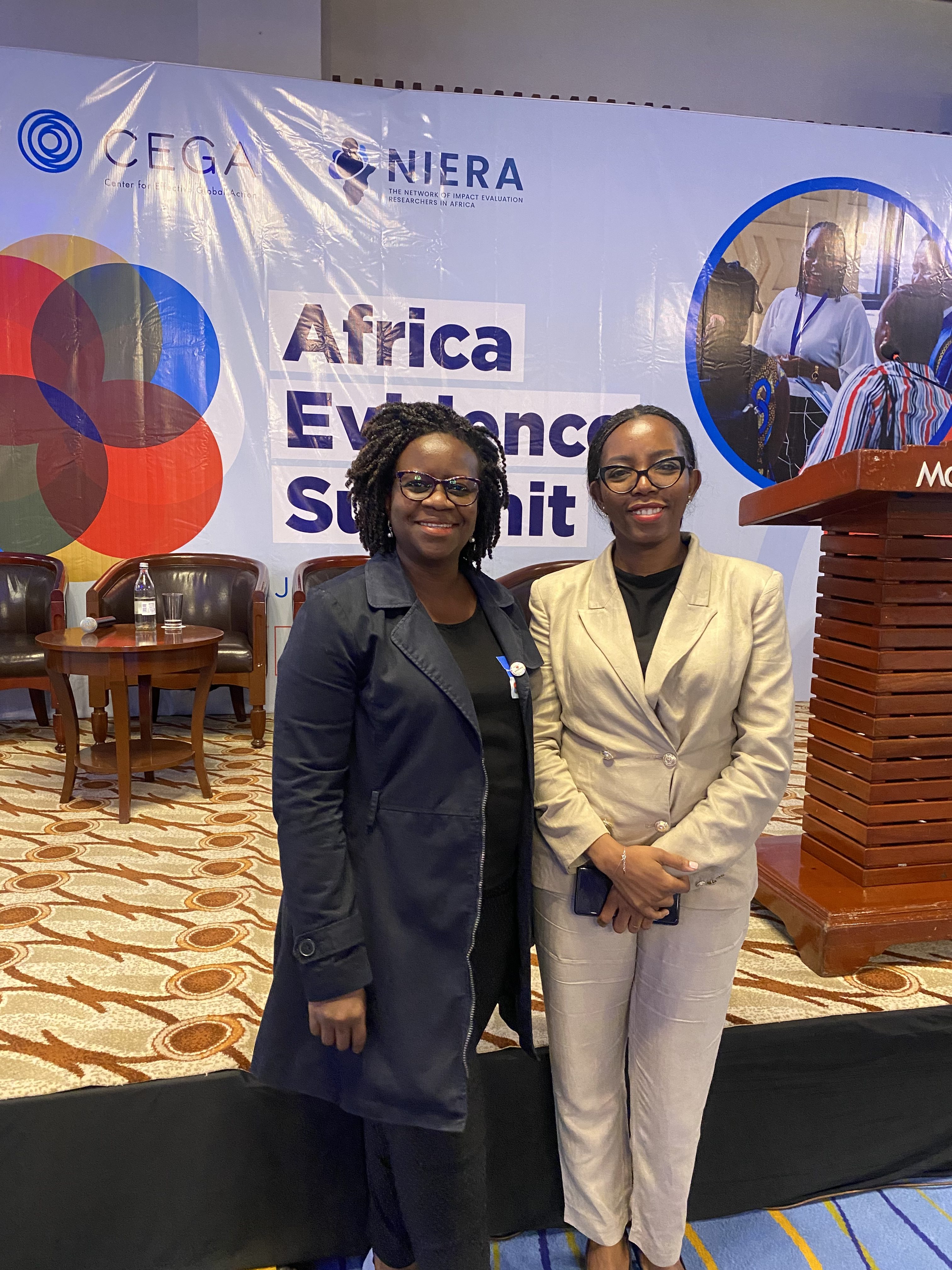
Attending the Africa Evidence Summit, held in Nairobi on 23–24 June 2025, was invigorating. With its theme “Better Data for Decision-Making,” the Summit highlighted the essential role that solid data and thoughtful analysis play across all areas of development. While one session focused on health, the bulk of the discussions and presentations were centered on non-health sectors such as education, agriculture, gender, and climate. Coming from a health background, I found this cross-sector exposure especially valuable. It was fascinating to see how evidence-informed decision-making (EIDM) is being applied beyond the familiar boundaries of health. Across different panels, it became clear that principles like cost-effectiveness, transparency, and inclusivity are relevant no matter the field. Whether it was a study on educational outcomes or one on agricultural interventions, the common thread was a shared commitment to using high-quality evidence to shape better policy. For me, the Summit was a powerful reminder that advancing EIDM is truly a collaborative, interdisciplinary effort.
Responding to a Changing Aid Landscape
One of the Summit’s opening panels, “Responding to a New Landscape in Foreign Aid,” felt especially urgent with panellists examining how steep aid budget cuts threaten progress on health, education, and more. The discussion underscored a central lesson that in times of scarce resources, solid evidence can help governments do more with less. I left that session convinced that leveraging local data and evaluation to guide policy, whether in clinics or school programs, will be critical as aid strategies shift. Clearly, cost-effectiveness evaluation is now more important than ever to weather funding shocks.
Cross-Disciplinary Insights
One of the most striking things about the Summit was how consistently the core principles of evidence-informed decision-making came through, regardless of the sector being discussed. Sessions ranged from education and gender to climate change and data innovation, yet the underlying message was the same: good policy needs good evidence. I remember one session in particular, focused on education, where the conversation turned to the growing demand from policymakers for rigorous research to guide workforce training programs. During informal chats with colleagues from fields like agriculture, economics, and education, we kept coming back to a shared realisation. While our subject areas may differ, we’re all working toward the same goal: producing high-quality evidence that leads to more innovative policies. That sense of shared commitment across disciplines was one of the most encouraging takeaways from the Summit.
AI, ML, and Local Innovation
The sessions on data science and artificial intelligence were especially engaging. One presentation showed how machine learning is being used to improve poverty targeting in Brazzaville. At the same time, another introduced a practical framework for evaluating the impact of AI tools in development work. These sessions highlighted just how much potential these technologies hold for solving real-world problems. At the same time, it was hard to ignore that many of these initiatives are still being developed and driven by teams based outside the continent. It raised an important question for me: how can we ensure that Africa isn’t just a testing ground for global innovation, but a leader in it? There’s a clear need to support more African-led AI efforts or initiatives that are built on local data, grounded in local contexts, and led by researchers who understand the realities on the ground. I hope future Summits will make more space for showcasing and supporting homegrown tech solutions.
Demand-Driven Research and Inclusive Ecosystems
Another strong theme was ensuring research meets local demand and includes diverse voices. Panellists stressed that research questions should originate from policymakers and communities, not just academic interests. Sessions like “Policymakers’ Demand for Evidence” exemplified this stakeholder-driven approach. At the same time, calls for inclusivity were frequent. Catherine Kyobutungi, the Executive Director at African Population and Health Research (APHRC) and others reminded us of the need for local leadership in setting research agendas. Jane Mariara, the Executive Director at Partnership for Economic Policy (PEP), emphasised building local capacity and partnerships so that evidence is both generated and used in African contexts. She urged us to cultivate inclusive networks where African scholars lead the agenda. From the opening remarks to the closing panels, there was a clear and consistent message: Africa’s evidence future must reflect the diversity of its people. That means creating space for women, youth, civil society voices, and researchers from across the continent. Catherine Kyobutungi captured this perfectly when she said, “The best way to predict the future is to create it.” It was a reminder that building a strong, responsive evidence ecosystem is a collective effort and that we each have a role to play. One panel, “Building a More Inclusive Evidence Ecosystem,” showcased findings on who participates in research (who sets the research agenda, who leads the studies, who gets funded, and whose voices are represented in the findings). It’s clear we need more networks like the Mawazo Institute that amplify underrepresented scholars. The drive to co-create solutions, rather than passively waiting for answers, was a powerful takeaway and reassured us that we at Cochrane Kenya/KEMRI are doing something right.
The Summit left me feeling re-energised. It reinforced something I’ve always believed: none of us works in isolation. Whether you’re researching malaria, market behaviour, or machine learning, we’re all part of the same broader effort to use evidence for good. As the saying goes, “If you want to go fast, go alone; if you want to go far, go together.” The Summit made it clear: Africa’s evidence journey is one we’re walking together.
About the author: Barbara Bakhita Miheso is a research scientist and a clinical trialist at the Kenya Medical Research Institute (KEMRI). With a passion for evidence synthesis and knowledge translation, she has spent the past five years championing the dissemination of contextualised public health research evidence to decision-makers. Barbara also serves as the Co-Director of Cochrane Kenya, where she provides strategic leadership in promoting evidence-informed healthcare by supporting capacity building in systematic reviews and knowledge translation, mentoring researchers, healthcare workers and policy makers, fostering partnerships and championing the use of research evidence in policy and practice across Kenya and the region. Her dedication to evidence-informed decision-making (EIDM) is evident in her work, and she is recognised as an emerging woman in science champion in East Africa.
Acknowledgements: The author is solely responsible for the content of this article, including all errors or omissions; acknowledgements do not imply endorsement of the content. The author is grateful to Charity Chisoro for her guidance in preparing and finalising this article, as well as her editorial support.
Disclaimer: The views expressed in published blog posts, as well as any errors or omissions, are the sole responsibility of the author/s and do not represent the views of the Africa Evidence Network, its secretariat, advisory or reference groups, or its funders; nor does it imply endorsement by the afore-mentioned parties.
Suggested citation: Miheso BB (2025) Co-Creating Africa’s Evidence Future: Reflections on the 2025 Africa Evidence Summit. Blog posting on 25 July 2025. Available at: https://africaevidencenetwork.org/co-creating-africas-evidence-future-reflections-on-the-2025-africa-evidence-summit/2025/07/25/