From Evidence to Impact: A Conference Experience
I was thrilled to join the 8th Evidence to Action Conference in Accra, Ghana, from 14 to 18 July 2025, where innovators, policymakers, and other various experts converged to drive participatory governance and sustainable development in Africa. The event was hosted by the International Centre for Evaluation and Development (ICED) and the Institute of Statistical, Social and Economic Research (ISSER). As the Africa Evidence Network (AEN), we showcased our work and established powerful connections with fellow change-makers passionate about evidence-driven impact. This premier event ignited collaborations and ideas, propelling us toward a future of inclusive governance and transformative change.
Pre-Conference Highlights: Transforming Evidence Synthesis with AI
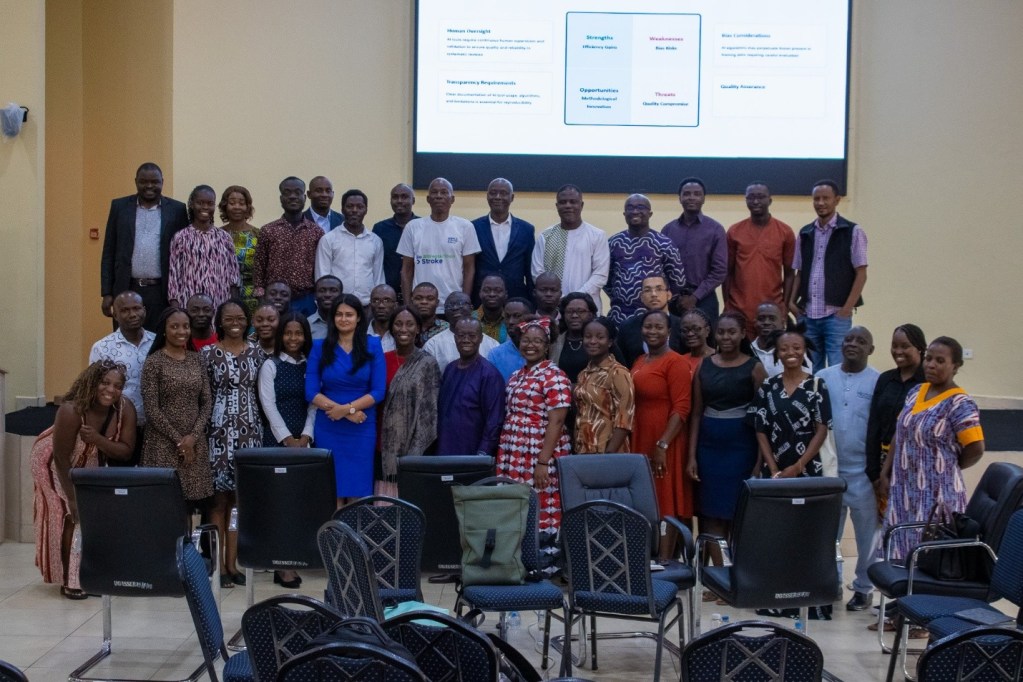
A session on harnessing artificial intelligence (AI) in evidence synthesis highlighted the importance of involving diverse stakeholders from the outset to ensure meaningful engagement and effective adoption. This session was facilitated by Dr Ashrita Saran, the Director of Research at The Research and Evaluation Centre (REC). She highlighted that AI could transform systematic reviews by automating time-intensive tasks, increasing efficiency while maintaining rigour. By inclusively shaping these tools, they become more impactful and relevant, making research processes smarter and faster.
Governance, Digital Systems, and Connections
The second pre-conference day featured an exciting session facilitated by Kirchuffs Atengble, the Executive Director of PACKS Africa, which highlighted the potential of digital systems and data practices in promoting good governance in Sub-Saharan Africa through transparency, accountability, and citizen engagement. By leveraging technology, governments and organisations can gain real-time insights, increase efficiency, and improve data quality. A key takeaway was the importance of adopting a systems thinking approach, which considers the complex interrelationships within governance systems and integrates digital solutions to promote more inclusive and data-driven practices, ultimately leading to more effective and sustainable governance solutions.

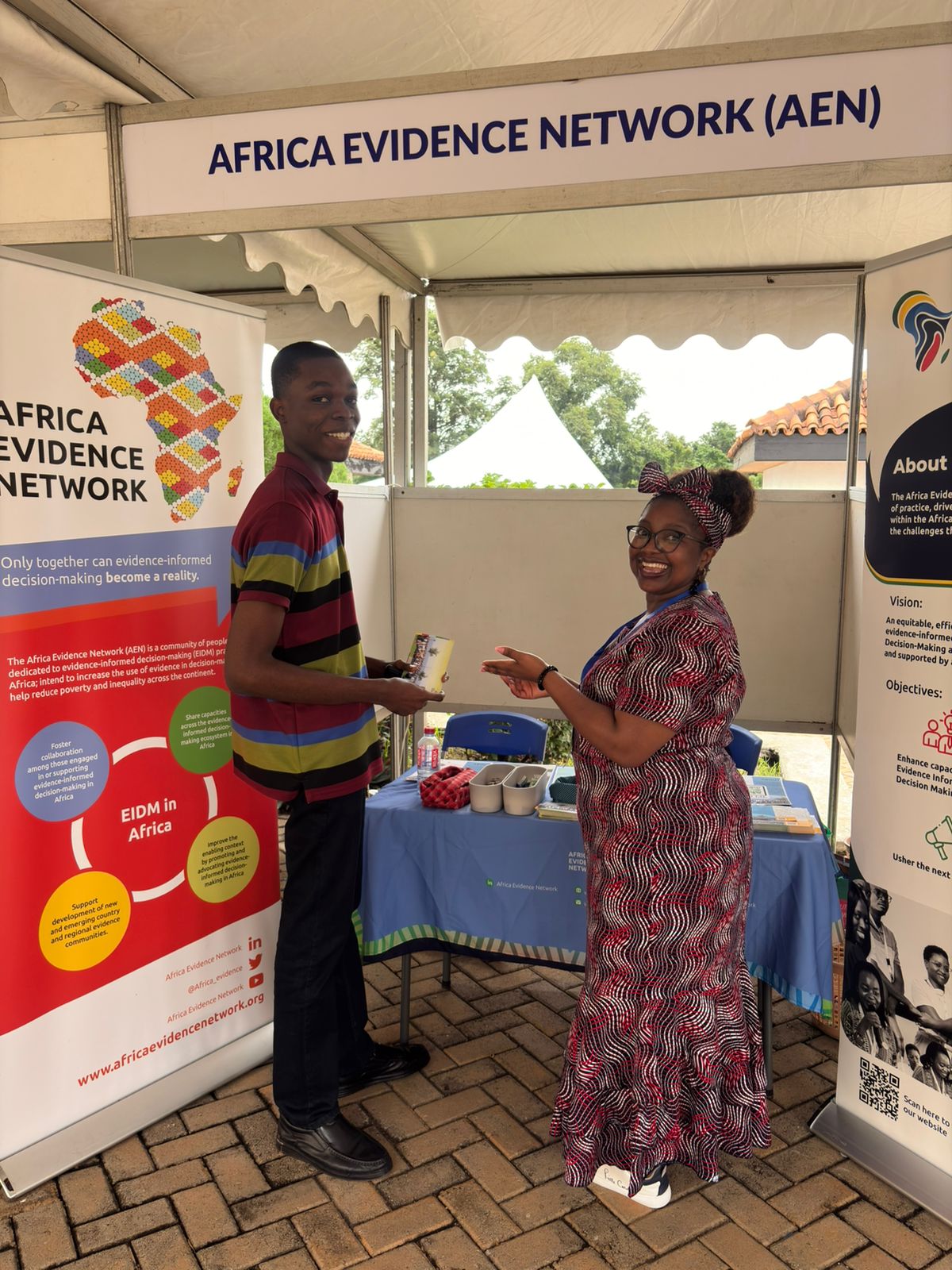
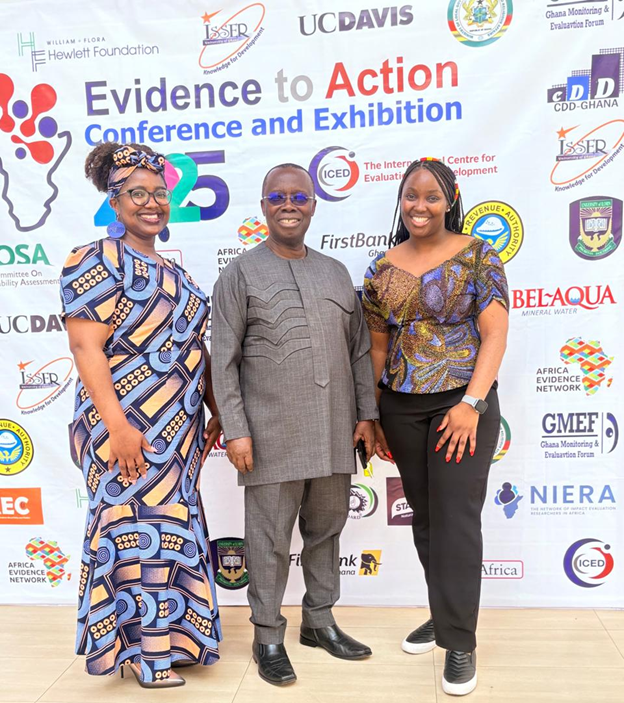
Another highlight of the day was the engagement I had with Professor David Sarfo Ameyaw, the President and CEO of ICED, together with my colleague Tanya Mdlalose, where he commended the AEN’s work in fostering connections and collaborations. He went on to emphasise how we should strengthen these networks for meaningful change. Overall, the first two days of pre-conference activities were electric, providing a valuable chance to reconnect with familiar faces in the evidence-informed decision-making space. Our exhibition stand facilitated valuable engagement and networking opportunities, further supporting the mission of civil society organisations (CSOs) in driving positive change.
Uniting for Impact: Inclusion, Integrity, and Innovation
The opening session of the main conference featured Honourable Ahmed Ibrahim, Minister of Local Government, Chieftaincy and Religious Affairs in Ghana, who set the tone for innovative research and practices to support underserved populations and promote responsive governance. Other notable speakers included Prof Peter Quartey, Director of ISSER, and Prof Nana Aba Appiah Amfo, Vice Chancellor of the University of Ghana, including Professor David Sarfo Ameyaw, who amplified the Minister’s call in their various keynotes.
A plenary session highlighted key strategies for advancing participatory governance in Africa, emphasising the need for active citizen engagement, leveraging technology for inclusion, and building multi-stakeholder coalitions. By involving citizens in idea generation and policy development, legitimacy is strengthened. The session stressed the importance of centering youth and prioritising women’s participation for gender-responsive governance. By focusing on inclusion, integrity, and innovation, participatory governance can become a tangible reality, making it a crucial approach for effective citizen engagement and inclusive governance.
AI as a Tool for Promoting Equity and Participatory Governance
Dr. Ashritta Saran further highlighted the significance of collaboration and capacity development, noting that AI can be a powerful tool for promoting equity when used effectively, rather than a quick fix for systemic issues. The day’s presentations were engaging and informative, and the programme was packed with exciting events, fostering rich discussions, meaningful engagements, and valuable networking opportunities amidst a hectic but productive schedule.
The session on “The Role of the Judiciary in Promoting Participatory Governance” underscored the importance of a transparent and accountable government in Sub-Saharan Africa’s sustainable governance, echoing the same fundamental role that AI can play in achieving such governance. While the judiciary plays a vital role in fostering participatory governance, challenges persist, particularly in accessing justice due to poverty. To drive sustainable development, strengthening the judiciary is essential, enabling it to promote good governance and uphold citizens’ rights effectively.
Funding the Future: The Role of Civil Society
A session on “Financing Civil Society: Balancing Independence and Sustainability” yielded key insights, including the importance of efficiency, reducing waste, and a well-defined policy framework for CSOs’ sustainability. Partnerships, trust, and accountability are critical, with CSOs advised to prioritise agenda-setting and ownership of their development process. A national pooled fund could be a potential way to enhance CSOs’ effectiveness.
Key Reflections
Empowering Citizens through Decentralisation and Participation
Inclusive decision-making through decentralisation requires the treatment of sustainable development as a moral and strategic imperative, promoting equity and gender equality, and good governance founded on accountability, transparency, consensus, and inclusiveness.
Prioritising citizen engagement and data-driven insights to ensure all voices are heard, promoting gender equality through diverse perspectives and leadership, and upholding sound governance principles such as accountability, transparency, and consensus are central. By adopting this approach, we can navigate complex challenges and develop practical solutions for a more equitable future.
Strengthening the African evidence ecosystem partnerships for impact
The conference attracted a significant number of delegates, facilitating meaningful connections among like-minded individuals who are passionate about leveraging evidence to drive decision-making and tackle poverty and inequality, ultimately fostering a collaborative environment geared towards creating a more equitable and sustainable world. Overall, the conference contributed to building diverse relationships necessary in advancing our collective mission. The conference was a testament to the impact that can be achieved when diverse stakeholders come together to share innovative research and practices, and I’m grateful to have been a part of it. As the AEN, we’re committed to continuing this vital work, and I’m excited to see the ripple effects of our collective efforts.
About the author: Charity Chisoro is a dedicated advocate for evidence-informed decision-making (EIDM) and capacity development, leading the Africa Evidence Network’s efforts to enhance evidence capacities across Africa. With a strong academic background in Development Studies and Social Impact Assessment, Charity leverages over 5 years of experience in strategic communications to drive social impact. As a passionate educator and mentor, Charity empowers learners and professionals alike while pursuing a PhD in Development Studies. Charity is committed to collaborating with like-minded individuals to foster positive change and advance evidence-driven practices.

Acknowledgements: The author is solely responsible for the content of this article, including all errors or omissions; acknowledgements do not imply endorsement of the content.
Disclaimer: The views expressed in published blog posts, as well as any errors or omissions, are the sole responsibility of the author/s and do not represent the views of the Africa Evidence Network, its secretariat, advisory or reference groups, or its funders; nor does it imply endorsement by the afore-mentioned parties.
Suggested citation: Chisoro C (2025) Collaboration, Innovation, and Impact: My Experience at the Evidence to Action Conference. Blog posting on 25 July 2025. Available at: https://africaevidencenetwork.org/collaboration-innovation-and-impact-my-experience-at-the-evidence-to-action-conference/2025/07/25/