Introduction
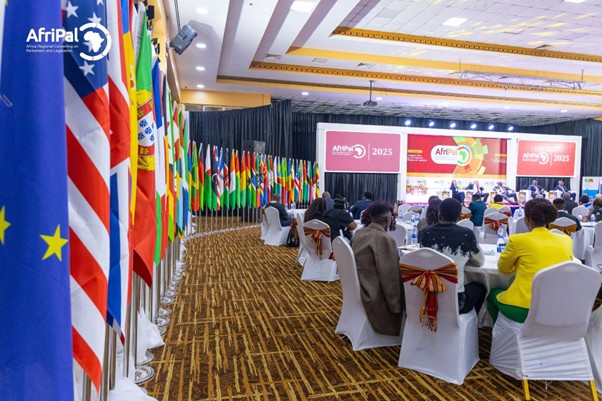
The inaugural Africa Regional Conference on Parliament and Legislation (AFRIPAL), held from June 18–19, 2025, in Kampala, Uganda, marked a significant stride toward reinforcing parliamentary democracy and legislative efficiency within the continent. The birth of AFRIPAL stemmed from a pressing need to reconcile academic research with practical policymaking. With an overarching theme of “Parliaments in Africa: Opportunities and Prospects for Sustainable Development,” this two-day event brought together a diverse mix of stakeholders, including legislators, civil society representatives, academics, and policy experts, all united by a common goal: to elevate parliamentary governance across Africa.
A Strategic Platform for Dialogue
AFRIPAL aims to serve as a strategic forum fostering high-level conversations that bridge research, practice, and capacity-building within the legislative sphere. The conference’s key objectives included diagnosing critical challenges in representation and oversight, spotlighting innovations in legislative processes, and fostering partnerships to build a collaborative ecosystem among parliaments, academia, and civil society.
Notably, the event attracted a diverse audience, with 334 delegates from 65 unique national entities, including engagement from European and North American partners. This attendance was indicative not just of the growing interest in African legislative practices, but also of the recognition of the need for a cooperative approach to tackling these challenges.
Exploring Key Sub-Themes
The conference centered on several pivotal sub-themes that reflect the challenges and opportunities facing lawmakers in Africa today:
Emergencies and Parliamentary Functions: As parliaments navigate the dual demands of law-making and crisis response—exemplified by adaptations made during the COVID-19 pandemic—this sub-theme critically examined how legislative bodies can effectively balance these responsibilities.
Parliaments, 4IR, and Artificial Intelligence: The conference explored the potential for emerging technologies to enhance legislative efficiency. Experts deliberated on how innovations like artificial intelligence (AI) could streamline processes and improve oversight.
Post-Legislative Scrutiny and Impact Assessments: Identifying best practices for monitoring the implementation and impact of legislation emerged as a central concern, underscoring the importance of accountability in governance.
Parliamentary Partnership, Learning, and Adaptation: The need for robust networks and capacity-building initiatives among African parliaments represented another focal point, as participants sought ways to share knowledge and learn from each other’s experiences.
Pre-Conference Highlights
The AFRIPAL conference featured several pre-event activities aimed at enhancing participant readiness. Notably, a Master Class Session delivered by Marci Harris from the POPVOX Foundation discussed the “Pacing Problem”—the gap between technological advancements and the adaptation of political institutions. It underscored the necessity of digital transformation in legislative processes. Harris’s insights on AI applications in parliamentary workflows illustrated how technology could bolster legislative efficiency and public engagement.
In addition, a unique dialogue event held at Makerere University succeeded in connecting early career researchers and established academics to discuss Europe-Africa research collaborations, setting a collaborative tone for the main conference.
A Historic Launch of Key Initiatives
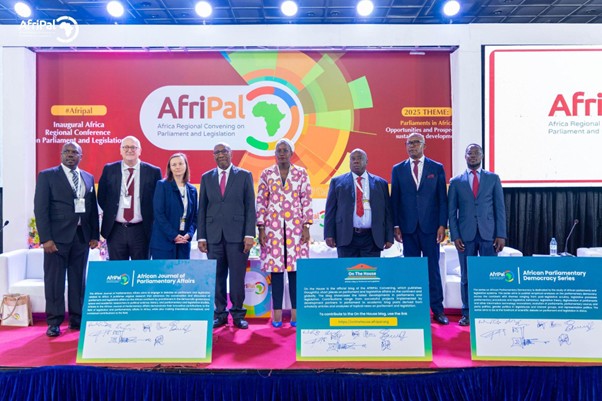
The conference culminated in a historic ceremony where the Chief Guest, Rt. Hon. Ruhakana Rugunda, former Prime Minister of Uganda, launched several transformative initiatives including the African Association of Legislation (AAL), the African Journal of Parliamentary Affairs, the Africa Parliamentary Democracy Series, and the AFRIPAL Blog On the House. These initiatives aim to serve as vital resources that promote legislative accountability, innovation, and scholarly discussion surrounding governance trends across the continent.
Looking Ahead: Commitment to Sustainable Engagement
The successful convening of AFRIPAL sets a firm foundation for future biennial meetings and initiatives. Follow-up actions include the establishment of an online parliamentary resource hub and the preparation of a special issue dedicated to African Parliamentary Affairs. This commitment reflects the ongoing determination among stakeholders to strengthen legislative institutions, enhance accountability mechanisms, and harness innovative practices for sustainable governance in Africa.
Conclusion
The inaugural AFRIPAL Conference not only spotlighted the challenges facing African legislatures but also celebrated the ingenuity and determination of participants to reform and enhance the legislative landscape. As Africa continues to navigate complex socio-political challenges, initiatives like AFRIPAL are essential for ensuring that parliaments uphold their crucial role in democratic governance and sustainable development. Through collaboration, innovation, and commitment, the future of parliamentary democracy in Africa looks promising.
About the author: Josephine Watera (PhD) is a seasoned evaluator with sixteen years of working experience in the evidence-informed decision-making (EIDM) space. She is an Assistant Director of the Department of Research Services (DRS) and previous Head of the Monitoring and Evaluation Division in the Parliament of Uganda. She is a General Secretary of the African Association of Legislation (AAL). In 2023, she received the Africa Evidence Leadership Award in the Evidence User category offered by the Africa Evidence Network (AEN). Josephine holds a triple master’s degree in monitoring and evaluation, business administration, and social sector planning and management.

Josephine leads her team in generating and synthesising evidence for committees and individual members of parliament to inform budgeting, legislation, and oversight decisions. Josephine played a central role in developing a monitoring and evaluation framework. She has been instrumental in developing tools and frameworks. Josephine is currently supporting the development of guidance for responsible evaluation for the Independent Evaluation Group (IEG) of the World Bank Group (WBG). She is presently a member of the Ethics Guidance Working Group of the Canadian Evaluation Society.
In 2021, Josephine led two key processes: development of the African Evaluation Principles by the Africa Evaluation Association (AfrEA) and development of guidelines for establishment of Monitoring and Evaluation Systems in African Parliament by Twende Mbele. She was a member of the reference group for Development of Inter-Parliamentary Union indicators for democratic parliaments based on SDG 16. She is a member of the Independent Evaluation Panel of the Global Fund, past Board Member of the International Development Evaluation Association (IDEAS), and the Vice President of Uganda Evaluation Association (UEA). She is a member of the National Monitoring and Evaluation Technical Working Group, which undertakes identification of government evaluation topics, peer review and quality assurance of government evaluations, and facilitates use of the evaluation findings in the public sector.
Josephine has conducted several capacity-building programmes in the field of monitoring and evaluations. In 2021, she developed a monitoring and evaluation module for the Commonwealth Parliamentary Association Academy. She facilitated the Development Evaluation Training in Africa (DETA). In 2018, she delivered training on “Evidence for Policy Making and Implementation course” organised by the Nelson Mandela School of Public Governance, University of Cape Town, South Africa. She conducted capacity needs assessment and training in performance management systems and designed evaluation tools for Malawi Parliamentary Committees. Josephine was a mentor in the Pilot EvalYouth International Mentoring Programme, which aimed to build the evaluation capacity of young and emerging evaluators. She was also awarded the most promising evaluator from developing countries by the American Evaluation Association in 2017.
Acknowledgments: The author is solely responsible for the content of this article, including all errors or omissions; acknowledgements do not imply endorsement of the content. The author is grateful to Charity Chisoro for her guidance in preparing and finalising this article, as well as her editorial support.
Disclaimer: The views expressed in published blog posts, as well as any errors or omissions, are the sole responsibility of the author/s and do not represent the views of the Africa Evidence Network, its secretariat, advisory or reference groups, or its funders; nor does it imply endorsement by the afore-mentioned parties.
Suggested citation: Watera J (2025) Bridging Evidence and Practice: Key insights from the inaugural AFRIPAL 2025 conference as a scholarly platform for parliaments in Africa. Blog posting on 25 July 2025. Available at: https://africaevidencenetwork.org/bridging-evidence-and-practice-key-insights-from-the-inaugural-afripal-2025-conference-as-a-scholarly-platform-for-parliaments-in-africa/2025/07/25/