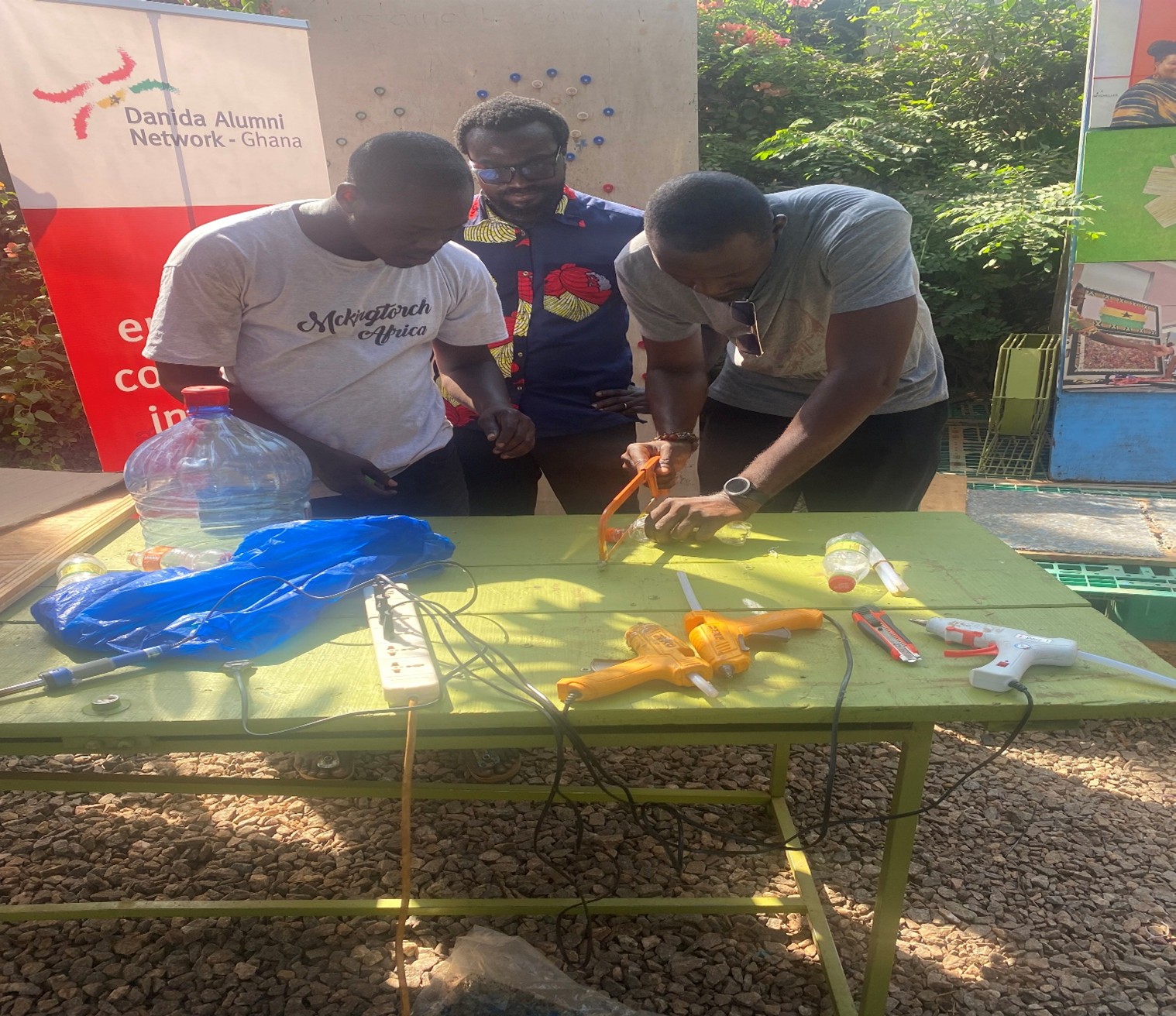
A recent study outlines multiple pathways to address the rising piles of waste and why collaboration is key to creating effective plastic action roadmaps. One such project is the End Plastic Pollution Consortium (EPPC). The project involves training in reusable packaging in Ghana on reuse systems, circular economy, legislation & how to make reuse work to cut plastic waste through up-and-midstream solutions like switching from single-use packaging to reusable alternatives for solutions along the plastic waste value chain i.e. refuse, reuse, recycle, repurpose & repackage.
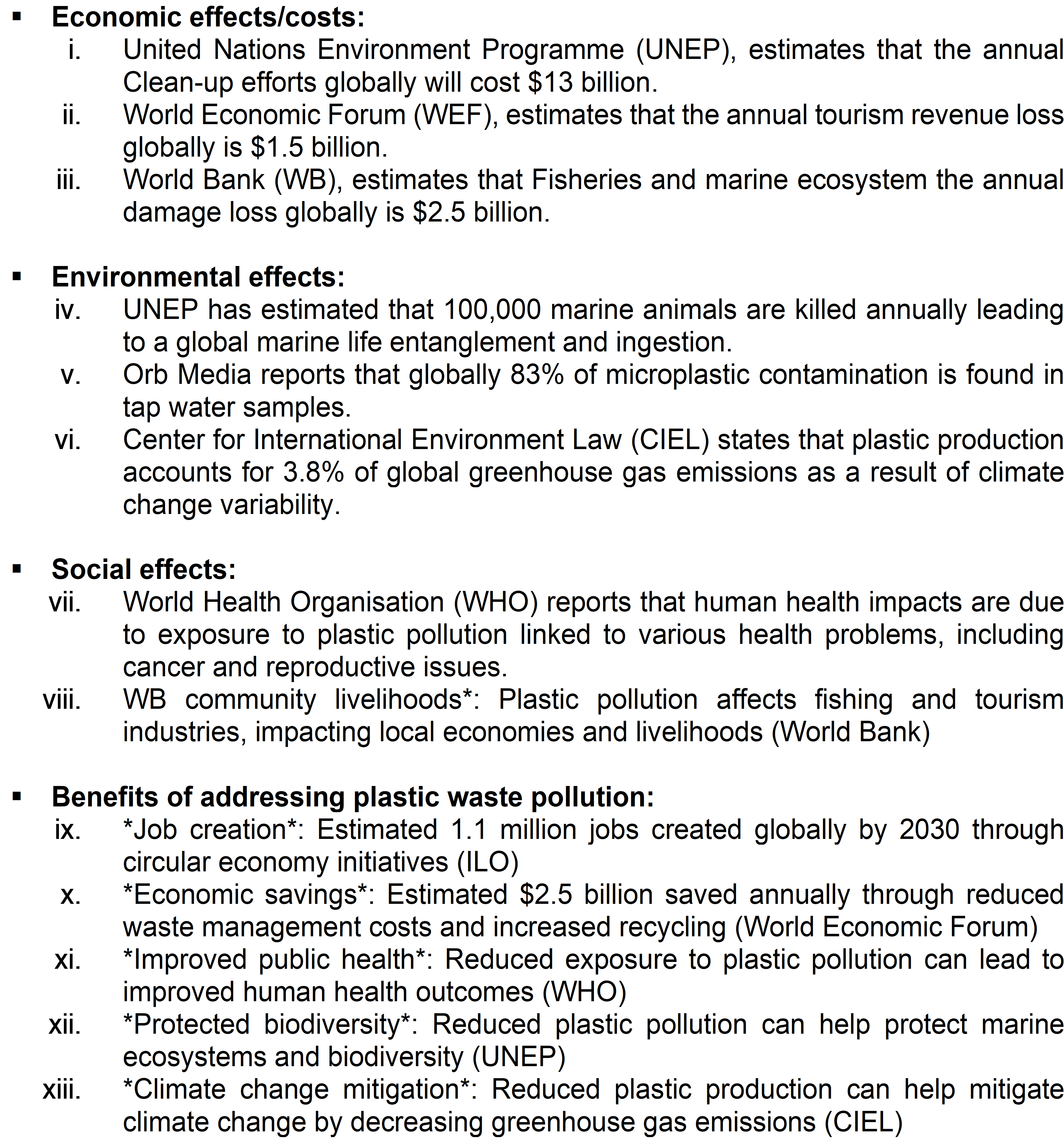
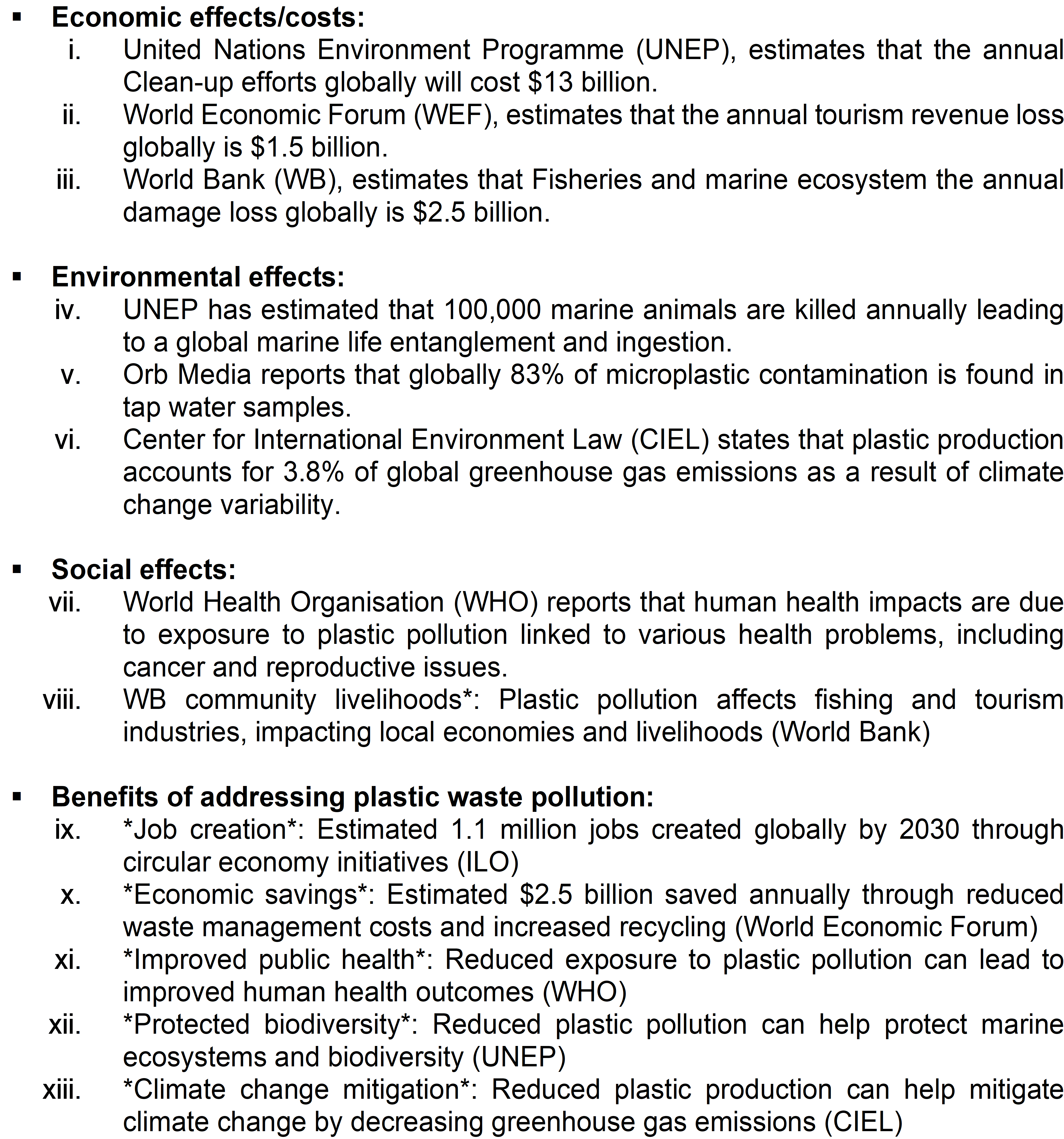
Plastic waste pollution has significant effects on human life and costs and benefits to society that must be addressed. The following data and statistics indicate some of the economic effects and costs in addition to environmental and social effects and costs & benefits of addressing plastic waste pollution as listed in Table 1:
Kraban Support Foundation (KSF) as a member of the DANIDA professional network in Ghana collaborated with 2 other members namely Mckingtorch Africa; and Okatabanman Community Information Centre in the Adenta Municipality of Greater Accra Region to implement the EPPC project. Dr. Opare-Djan Nana, CEO KSF, was a Resource Person for the development of the EPPC Business program design. The EPPC project aims at helping to address the end plastic pollution by 2040 enshrined in an international treaty could have a similar impact to the 2ºC Paris Agreement goal on tackling the climate crisis.
The Danida Alumni Network – Ghana (DAN-G) a registered body corporate in Ghana focuses on independent projects and related governance activities. DAN-G members seek to engage in activities that promote good relationship between the Danish and Ghanaian government including the provision of opportunities for networking with member institutions and partnering with others globally especially in Ghana and Denmark, to develop innovative and sustainable business solutions. As a member of the DANIDA professional network, KSF played a key role in the design, training and application of outcomes of the EPPC business development program.
In a partially regulated market like the Ghanaian economy, monopolistic tendencies often dictate pricing dynamics, leading to price distortions that favor dominant sellers. Considering the scenario where individual business operate within the same market one pricing a product. When the lower-priced seller runs out of stock, consumers are left with no choice but to purchase from the higher-priced competitor. In the absence of continuous supply from the cheaper seller, market forces will naturally recalibrate to accommodate the higher price point. This phenomenon occurs because, in an open market without regulatory intervention, supply constraints create a temporary monopoly for the higher-priced seller, allowing them to dictate prices. Over time, consumer behavior adapts to the new pricing structure, reinforcing the elevated cost. Unless competitive forces are sustained through consistent supply from lower-priced sellers or through regulatory oversight, the market will structurally adjust to favor higher-priced goods, ultimately reducing consumer welfare and limiting affordability.
Positioning statement: To target the youth majority in Africa, who need a creative economy and cultural consumption, our collaborative intervention animates their imagination and motivation to unleash sustainable resources. The activities are proposed below:
Business Concept Co-creation:
Co-creation concept with community banks and microenterprises to benefit communities thereby increasing income, improved nutrition, employment generation, and empowerment of marginalized groups (youth, women, and small-scale farmers and entrepreneurs).
Building Deep Dialogue: Regular dialogue with stakeholders to understand their needs b) building trust-based networks and collaborate with key stakeholders
Building Shared Commitment: Managing stakeholder relationships in a way that balances competing interests and creates value for all parties contributing to the well-being of both the organization and its stakeholders. Shared commitment to community empowerment, social justice, and development of harmonious relationship with communities.
Collective Entrepreneurship Development:
Applying Community Capital for Credit Model:
Community Savings and Credit Associations would be formed to mobilize capital for on-lending to members based on the traditional domestic capital mobilization method of the Ghanaian rural communities. The capital mobilized would be supplemented with funds from rural and community banks for on-lending to members of the association.
New Capability Development:
These include:
- Building skills (leadership training, educational programs)
- Improving access to resources (financial, technical, social)
- Strengthening the ability to influence policy or decisions (advocacy, organizing)
- Creating a sense of ownership and responsibility for community projects or initiatives
- Grant-writing workshops – for gar/ other farming produce processing machinery, trucks, packaging etc. Internship opportunities through networking.

Business Enterprise Co-Creation:
Co-creation involves collaboration, dialogical interactions, learning and creativity. Business Enterprise Co-creation is that the Community banks would collectively sponsor a TV program where the micro-enterprises would share their ideas, knowledge and networks with them for their innovation of new financial products. The audience would be encouraged to call in to build on these ideas. Flex Jobs Co-creation with online tutoring and networking for Agricultural sustainability-related jobs
- Fitness
- Food and beverage manufacturing
- Food and beverage stores
- Food services and eating/drinking places
- Textiles, apparel, and leather products
- Forestry and fishing
- Real estate
- Distribution
- Transportation
- Logistics
- Pharmaceuticals
- Beauty
- Agricultural sustainability
- Construction
- Oil and Gas
- Green energy
- Solar energy
- Alternative meats
- Baby diapers
- Recycling
- Milk alternative industry
- Automotive industry
- Consumer packaged goods
- Life sciences
- Meditech
Business Prototype Co-creation
Business prototype co-creation would occur for businesses within the agricultural value chain. Ghana is primarily characterized by rain-fed agriculture with low groundwater irrigation development, low agricultural productivity, and high poverty rates. Climate change-induced uncertainty in rainfall intensity and timing is likely to worsen the situation in the region. The processes to be undertaken is based on the agricultural value chain to promote crop production (chilli pepper, vegetable, maize, tubers-yam, cocoyam, potatoes, etc).
Establish storage infrastructure, harvesting and milling equipment, build storage facilities, procure vehicles to transport farm produce to market centers and process excess produce to reduce post-harvest losses and provide excess for exports. This would also benefit community members including youth, women micro-entrepreneurs especially those in agribusiness, agro-processing thereby increasing incomes, improving nutrition, generating employment, and empowering the productive inclusive groups.
Project implementation will be inclusive food production through the following agrarian practices i.e. agricultural value chain activities – from farm to fork; aquaculture value chain activities – from pond to plate; environmental sustainability activities promoting recycle, reuse, repurpose and repackage; microfinance service delivery – based on the community capital for credit model. These project principles are aimed at informing the designs of potential replications, including the next phase of the program in other suitable sites with the support of their respective communities.
The project is to be leveraged to form a platform for the training of Ph.D. students throughout Africa starting with 40 African students at the University of Ghana. It is vital for global sustainability efforts in agriculture and recycling to be expanded. This includes building more capacity in this field. From idea generation to implementation, and many other related topics, join us to conduct research in the emerging and neglected issues across the area of sustainability of the rich natural resources of Africa.
To be eligible, applicants must meet all of the following criteria:
- Be nationals of, and ordinarily resident in, a sub-Saharan African country (as defined by the World Bank).
- Have submitted an application for the Ph.D. program or professional certification.
- Show evidence of motivation to pursue this program.
The programme is designed to develop students’ research skills to strengthen their ability to conduct rigorous academic research in various fields of business. It focuses on three basic areas:
- Rigorous training in general research methods as well as those specific to a discipline. This ensures the ability to conduct research at an advanced level. Such training is typically covered in two semesters of coursework and throughout the programme in substantive seminars and workshops.
- Substantive coursework in a subject area discipline beyond the master’s degree level. This is designed to ensure theoretical, applied and empirical knowledge of the subject matter of the discipline. Such coursework is typically covered in one semester by students with an appropriate background such as the GIMPA Master of Research degree.
- A supervised written thesis that typically takes up to two years to complete.
Areas of Specialisation
- Sustainability
- International Business
- International Marketing
- Marketing
- Project Management
- Community development
Applicants interested in a multi-disciplinary area such as Entrepreneurship or Corporate Social Responsibility will be encouraged to apply to any of the above areas depending on their interest.
Mode of delivery
The program will be delivered wholly virtually and non-virtually. There will be a mix of live and interactive activities (synchronous learning) as well as recorded or self-directed study (asynchronous learning). Examples of synchronous learning are live online lectures, group discussions and seminars. Asynchronous learning includes pre-recorded lectures, independent reading and activities.
This program when linked to CAC initiatives will offers students the opportunity to register for a Postgraduate Certificate (PGCert) or Postgraduate Diploma (PGDip).
Author: Dr. Opare-Djan, Nana: CEO of Kraban Support Foundation, Ghana