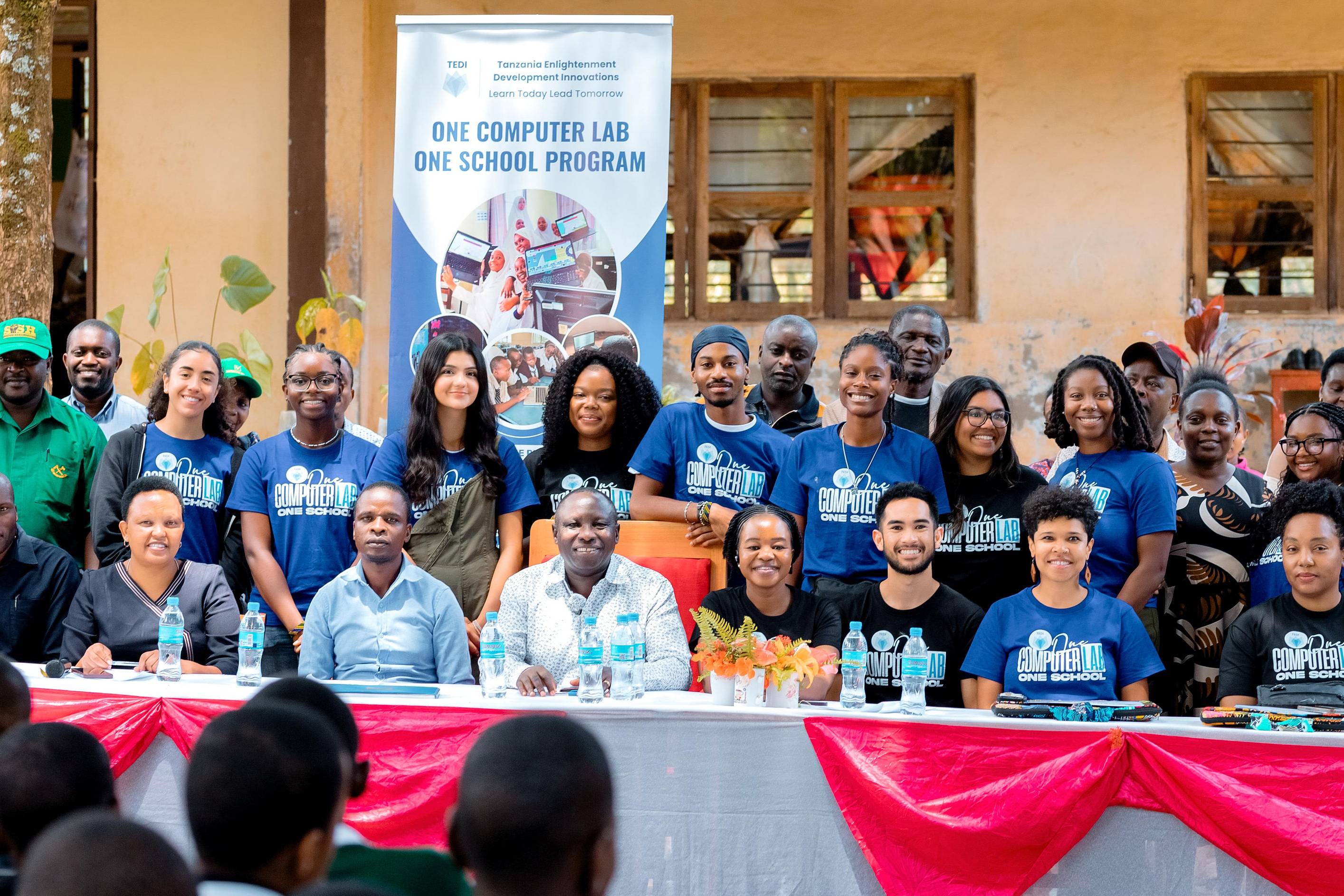

Image: African countries reach through the activities of the project
Why This Conversation Matters
Africa is living the reality of climate change evidenced by droughts, floods, and heatwaves which are no longer distant threats but daily challenges. These impacts disrupt livelihoods, strain economies, and demand urgent decisions. Yet, too often, those decisions lack the right evidence at the right time. That’s where the Knowledge and Climate Services from an African Observation and Data Infrastructure (KADI) project steps in.
The KADI Research and Knowledge Infrastructure is not just about data, it is about making science work for people. It is about ensuring that climate services, the tools and insights that help manage climate risks, are rooted in African contexts and co-created with those who use them.
Evidence-Informed Decisions Start with the Local Context
Climate services are powerful, but only when they speak the language of local realities. A seasonal forecast means little if it ignores seasonal challenges like heat waves in Nairobi or flash floods in Dar es Salaam. KADI’s approach was simple yet transformative: embed local knowledge and participatory processes into every stage of climate service design.
This is Evidence Informed Decision Making (EIDM) in action, where science and policy come together to create solutions that are credible, trusted, and relevant. By aligning with frameworks like the African Union’s Agenda 2063, KADI ensures that evidence does not sit on shelves but drives decisions that matter.
How did KADI Do It?
KADI’s work rested on four pillars that make climate services practical and tangible:
- Data-Driven Solutions: Strengthening observation networks and integrating in situ, satellite, and modelled data for robust insights.
- Co-Creation: Iteratively engaging local actors – residents, city planners, community leaders, researchers and policy makers – in interactive processes that reflect cultural and socio-economic realities.
- Knowledge Exchange: Empowering African scientists and institutions through training, stakeholder engagement, and Communities of Practice.
- Open Science: Promoting transparency and equitable access to climate data across the continent.
KADI was not just a research project; it is a collaborative framework that sets the base for bridging the gap between knowledge and action.
From Knowledge to Action: Real Stories
KADI’s impact towards building the foundation for an African observation and data infrastructure is already visible:
- Planning forecast information dissemination aligned with local needs and with local policy makers in Nairobi and Abidjan.
- Local Networks: KADI created networks linked to county governments to implement climate actions, establish early warning protocols, and map vulnerabilities and exposure in Nairobi. Kisumu and Mombasa will follow soon. The project shifted from bilateral exchanges to a “Community of Practice” model, for instance, improving coding literacy through a Python Data Training Gym and building a skilled expert network across over 18 countries, ensuring future-ready local capacity.
- Data for Decisions: Extreme heat thresholds for Nairobi were determined, enabling targeted adaptation strategies and improved risk management. The Mount Kenya pilot validated the hybrid observation model by establishing an automated Near-Real-Time (NRT) data flow to the ICOS Carbon Portal, acting as a “gold standard” example for connecting African data sources to global networks.
- Cities deployed low-cost sensors for real-time climate data, helping anticipate floods and heatwaves in Dar es Salaam. The pilots achieved tangible integration into public planning: air quality metrics were adopted into the Abidjan District Action Plan, and climate service costs were successfully lobbied into the Nairobi County annual budget.
- Youth gained practical skills through the Resilience Academy, co-creating solutions that matter for their communities.
- Participants Developed a roadmap to address Africa’s ocean observation needs.
These examples show what happens when evidence is context-driven and co-produced: decisions become more rooted in evidence, risks are reduced, and resilience grows.
Why This Matters for Evidence-informed Policy Making in Africa
KADI is an example of how evidence networks can transform climate science into evidence for policy. By embedding connection to policy in the research process, it ensures that climate services are not just data outputs but tools for adaptive governance. This strengthens institutional capacity, promotes inclusivity, and builds trust – key ingredients for effective EIPM.
Looking Ahead
Africa’s climate challenges are complex, but solutions like the KADI Research and Knowledge Infrastructure offer the basis for hope. They remind us that science must serve decisions and these decisions must reflect local realities. That is the future we need: evidence that empowers, partnerships that last, and climate services that make sense for Africa.
Join the Movement
Want to learn more about how KADI contributes to shaping Africa’s climate future?
- Explore the project website: kadi-project.eu
- Read the forthcoming KADI White Paper
- Access our forthcoming Blueprint for a Research and Knowledge Infrastructure
- Reach out to be part of the KADI Community of Practice
About the authors:
Dr. Theresia Bilola is a Policy officer with wide experience on driving climate action and sustainability initiatives.
She holds a PhD in Social Sciences from the University of Turku, Finland.
As an Erasmus Mundus alumnus, she has served as a country representative and partnerships manager for the Alumni association. Theresia is a member of the Africa Evidence Network.
Post-PhD Theresia worked on a series of consultancy projects related to development cooperation. With the intention to do something with visible and tangible impact, she was selected to volunteer at the UNFCCC’s COP23 alongside 600 volunteers selected from 4000 applicants from different countries.
As a project specialist at the city of Turku, Theresia conducted the first ever mapping of the City’s strategy in relation to the 169 targets of the Sustainable Development Goals. The results were used as a background for Turku’s first voluntary local review on the progress of the SDGs presented at the 2020 UN high level political forum. The mapping has also served as a base for work towards designing Turku’s circular economy roadmap and the subsequent update of the city strategy.
With ICOS as the coordinating partner of KADI, Theresia joined ICOS to coordinate a consortium of 16 partners from Africa and Europe, to advance the foundations of a pan African research infrastructure starting from the needs in terms of climate services. Theresia’s expertise spans EU project management, Africa-Europe cooperation, climate policy, science-policy links, and stakeholder engagement. By bridging policy and practice, Theresia supports organisations towards context-relevant climate action, contributing to global climate goals. This contributes to ensuring contributions to simplifying sustainability and the bridge between science, policy and society.
Theresia Bilola, PhD
Policy officer, Strategy & International Cooperation
Integrated Carbon Observation System (ICOS)
ICOS ERIC Head Office
www.linkedin.com/in/bilolatheresia | https://bsky.app/profile/theresiab.bsky.social

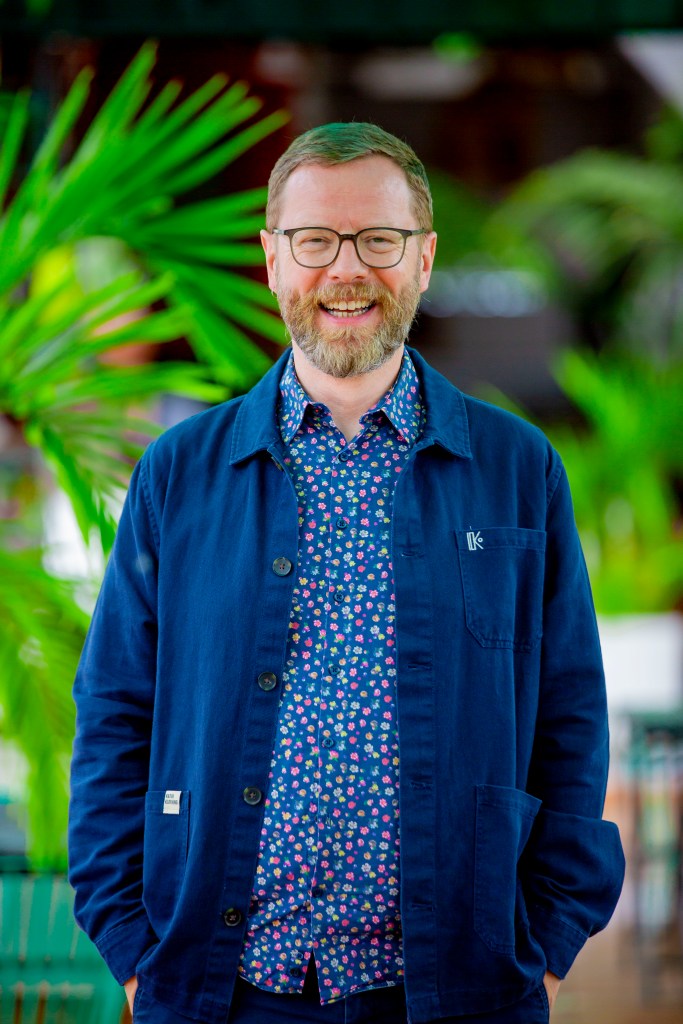
Dr. Emmanuel Salmon (male) is the Head of Strategy & International Cooperation at ICOS. He gained his PhD in Macromolecular Chemistry at the University of Strasbourg (France) in 1993 and worked for ten years as a researcher, in the fields of biodegradable polymers and polymer-based electrolytes for use in alkaline batteries.
From 1999 to 2008, he worked in the Communications department of a French Higher Education Institution in Paris, where he was in charge of internal communications and press relationships. He then joined the French foreign service as a scientific attaché at the French embassies in Finland (2008–2012) and Sweden (2012–2016).
Emmanuel Salmon joined ICOS in April 2017, initially to lead the contribution of ICOS in Horizon 2020-funded projects (mapping of cooperation opportunities between European and international Research Infrastructures in the field of environmental sciences, and designing an observational network of greenhouse gases for the African continent).
He took responsibility for the 2019 created unit for Strategy & International Cooperation, currently with three officers in his team. His main tasks are to expand and reinforce the international connections of ICOS to the main global cooperation frameworks (UNFCCC, GEO, WMO…), to improve collaboration with other environmental RIs, as well as to support the integration of new European countries into ICOS.
Emmanuel Salmon, PhD
Head of Strategy & International Cooperation
Integrated Carbon Observation System (ICOS)
ICOS ERIC Head Office
www.linkedin.com/in/nordicsalmon | @nordicsalmon.bsky.social
Acknowledgements: The authors are solely responsible for the content of this article, including all errors or omissions; acknowledgements do not imply endorsement of the content. The author is grateful to Charity Chisoro for her guidance in preparing and finalising this article, as well as her editorial support.
Disclaimer: The views expressed in published blog posts, as well as any errors or omissions, are the sole responsibility of the author/s and do not represent the views of the Africa Evidence Network, its secretariat, advisory or reference groups, or its funders; nor does it imply endorsement by the aforementioned parties.
Suggested citation: Bilola T & Salmon E (2026) KADI Research and Knowledge Infrastructure Advances Context-Driven Climate Services in Africa. Blog posting on 20 January 2026. Available at: https://africaevidencenetwork.org/kadi-research-and-knowledge-infrastructure-advances-context-driven-climate-services-in-africa/2026/01/20/