
Peter Fulgence Kasadha is the recipient of the Africa Evidence Leadership Award 2025 in the Evidence User category offered by the Africa Evidence Network. We asked Peter to reflect on his work.
Introduction
Evidence-Informed Policymaking (EIP) is a field created by individuals involved in policy and decision-making. As these different actors come together, complexity arises that requires clear, transparent, and systematic approaches when working in this area. As an early researcher in this field, I began this journey driven by a desire to connect policy and research. From my earlier experience as a university student, I always wondered, fuelled by enthusiasm and optimism, “what happens to the research papers we publish.” As I grew and gained a better understanding of this area, I appreciated the opportunity to contribute to Evidence to Policy strategies and to improve practices in Low- and Middle-Income Countries (LMICs).
At the Center for Rapid Evidence Synthesis (ACRES), an observation was made informed by evidence of the increasing demand for evidence products for policy. Government agencies in Uganda, including ministries like the Ministry of Health and Education, have shown interest in Evidence Synthesis products. However, this rising demand has created a new challenge: meeting it in terms of capacity and the critical pool of professionals able to perform these tasks.
As an institution committed to excellence and promoting timely access to the best available evidence for informed decision-making, we needed to strategise and explore options to bridge the gap between policy and research within our current capacity. We embarked on a vision to shape the learning journey of knowledge brokers and policymakers in policymaking. This initiative aimed to develop leaders in the field who can both influence and implement evidence-use practices in policymaking.
Additionally, with ongoing efforts by actors in the field to build capacity, much more can still be achieved by leveraging these efforts. For instance, we observed that most training programmes mainly focus on technical skills and overlook soft skills, which are crucial for engagement activities. Therefore, we aim to equip learners with practical skills beyond technical work and emphasise soft skills, which are essential for successfully translating evidence into actionable policy strategies.
The Approach
We developed a training programme based on evidence from actors within the evidence space. During this process, we spoke with knowledge brokers with over 10 years of experience, including mid-level and early-career knowledge brokers. We also talked to policymakers to understand their perspective on the ideal partners to promote evidence use. Using a skill set primarily informed by literature, we explored the lived experiences of these individuals to understand what has worked and to examine the complexities that influenced their career development.
A summary of our observations
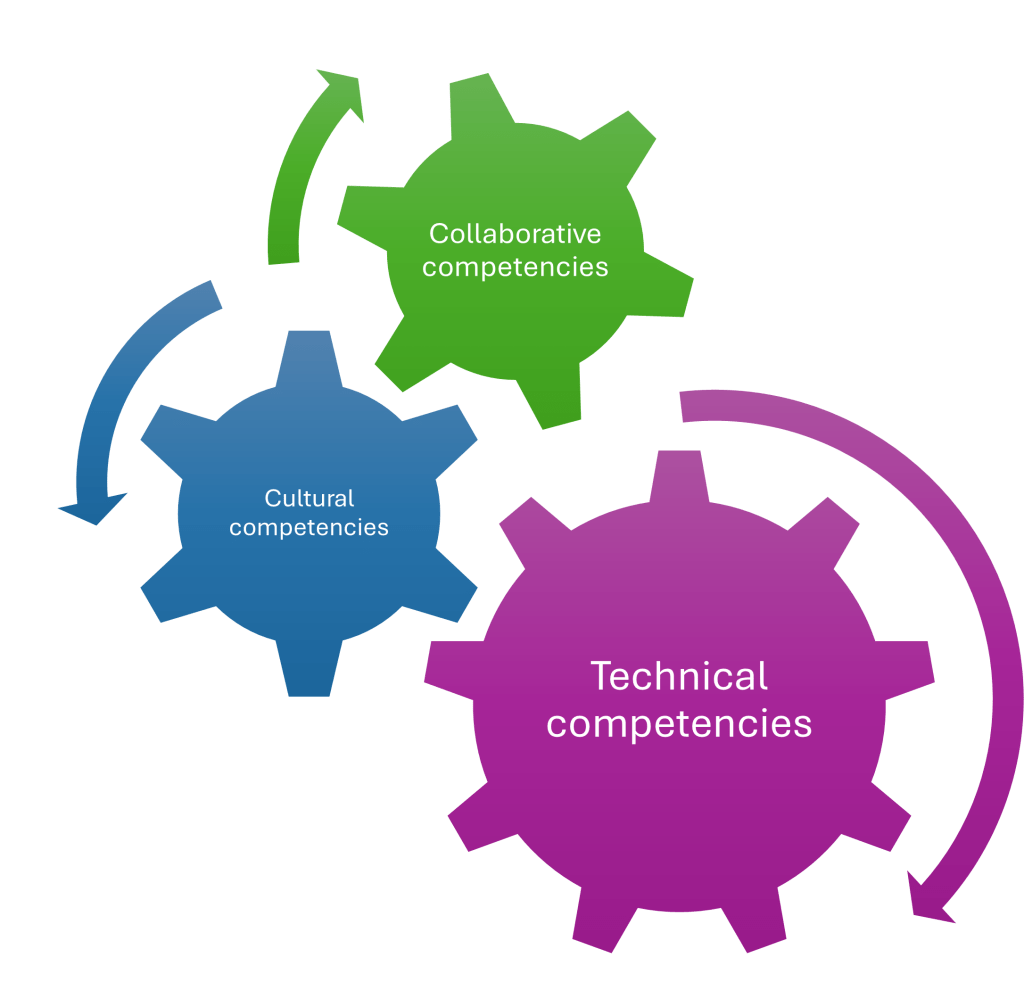
Using this information, we developed a comprehensive curriculum highlighting three key thematic competency areas for individuals to implement and promote EIP.
These include technical competencies, cultural competencies, and collaborative competencies:
Technical competencies involve the ability of knowledge broker practitioners to carry out EIP activities from a technical perspective, applying knowledge, skills, and attitudes to manage issues and ensure the use of evidence in policy-making processes.
Cultural competencies are vital for understanding stakeholders’ diverse needs, perspectives, and values and ensuring that evidence synthesis used to inform policy decisions is inclusive and equitable. Awareness of different policy perspectives helps EIP professionals navigate complex social and cultural contexts, remove systemic barriers to participation, and incorporate research evidence from other settings into specific policy decisions.
Finally, Collaboration competencies allow participants to work across disciplines and sectors, fostering innovation, creativity, and knowledge sharing in evidence synthesis, stakeholder engagement, and policy decision-making. Using interdisciplinary approaches, EIP professionals can draw on diverse perspectives, expertise, and methods to address complex policy challenges and support evidence-based solutions.
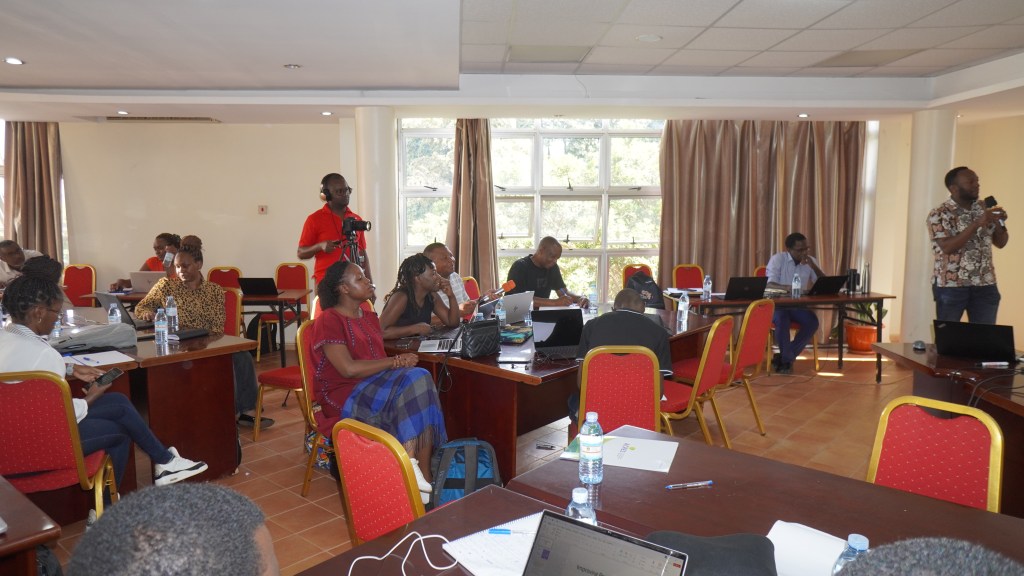
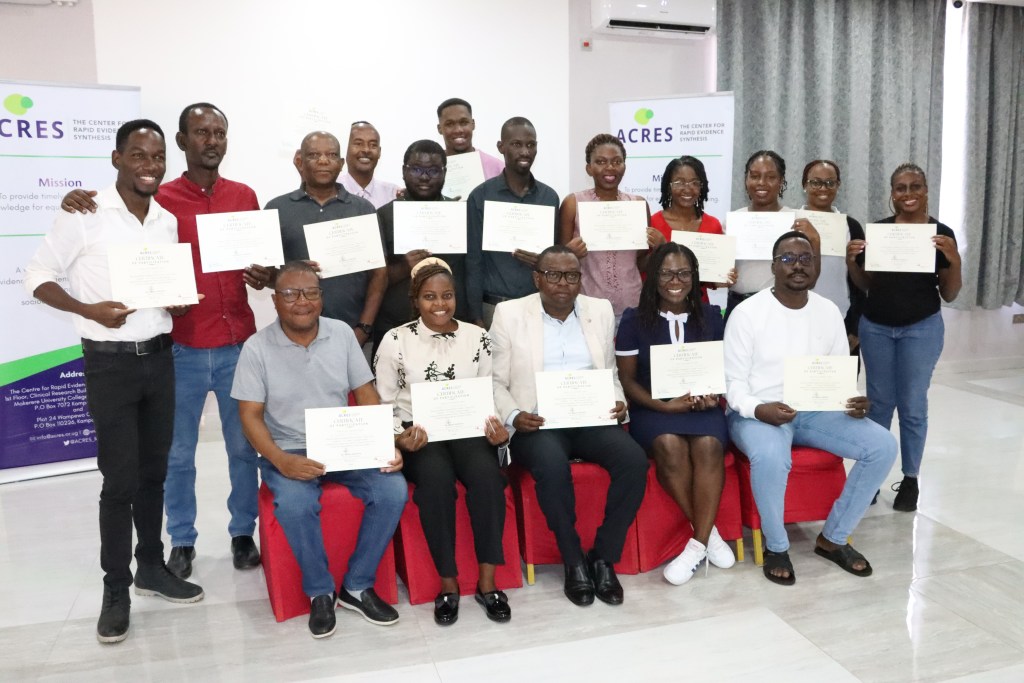
Having assembled this work over two years, we finally launched the entry-level pioneer cohort in September 2024, marking an incredible journey that enhanced the skills of eighteen participants, including five policymakers and thirteen knowledge brokers, in the entry-level training programme. From this training, we observed tangible progress among the cohort through the support given to specific policy processes, which was evident in the production of four reviews. These were:
- Team Uganda: Improving progression in public primary schools in Low- and Middle-Income Countries – A systematic review of available options
- Team Malawi: Climate adaptive interventions to address the burden of malaria in Low-and Middle-Income Countries
- Team Ethiopia: Strategies to increase women’s involvement in leadership and decision-making positions in Low-and Middle-Income Countries.
- Team Tanzania: Key indicators for monitoring and evaluation of national Health Insurance in Low-and Middle-Income Countries
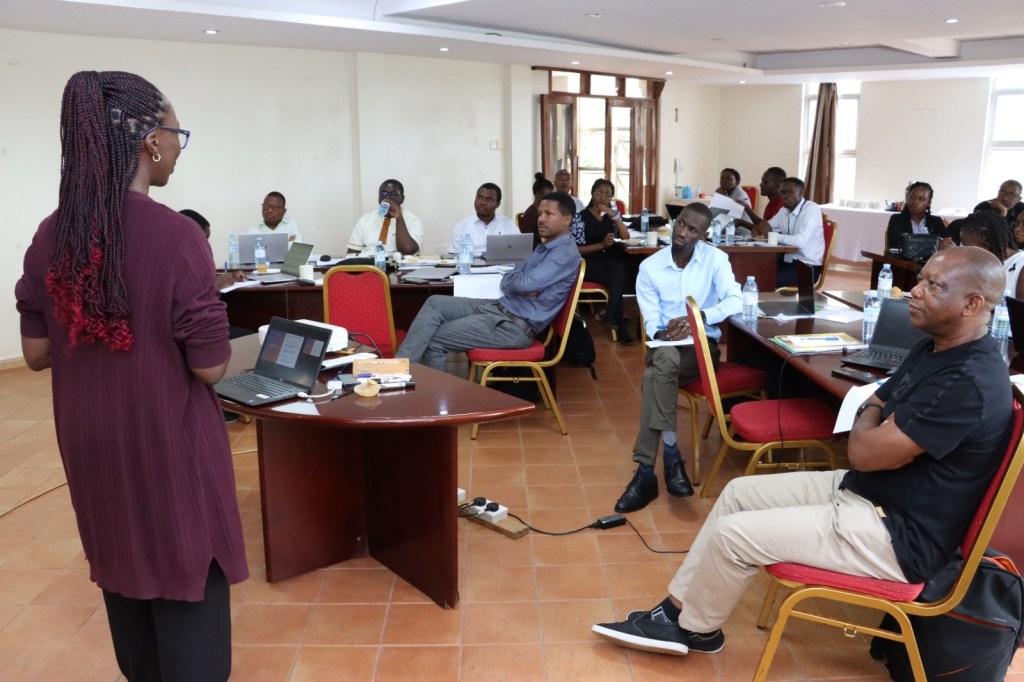
Currently, we are running the second cohort of mid-level practitioners, which includes eight knowledge brokers and eight policymakers who were admitted as participant pairs. Efforts are ongoing to leverage our opportunity to develop leaders.
What I see
Our analysis showed that competencies can be developed over time. Expecting one person to have all these skills at once is often a lifelong goal. Therefore, we strongly recommend that peers collaborate to leverage their strengths and promote EIP, which we attempted to support through the training programme by fostering networks and friendships to assist us moving forward. More importantly, as individuals, by mastering these skills and adopting the right attitudes, we can build a strong foundation for EIP and evidence use that will reach new heights, which is our shared goal.
Conclusion
Creating a training programme informed by evidence has been a valuable learning step for us, as we observe the ecosystem to equip individuals with skills and inspire learners to become leaders in the space. I believe all training programmes should focus on developing leaders and expanding their skill sets beyond their daily work to become leaders.

About the author: Peter Fulgence Kasadha is a dedicated environmental health specialist and knowledge broker with expertise in rapid knowledge translation models and evidence-informed decision-making (EIDM). As a Research Associate at the Center for Rapid Evidence Synthesis (ACRES), he works closely with policy and decision-makers to provide timely access to synthesised and contextualised evidence. Peter’s research interests include public health interventions in maternal and child health, and he has contributed to various evidence synthesis products, including systematic reviews and rapid reviews. With a strong passion for influencing policy decisions through research, Peter aims to become a leader in the research field, promoting equity and affordability of healthcare services. His work supports evidence-informed decision-making (EIDM) and policy development in low-income countries.
Acknowledgements: The author(s) is solely responsible for the content of this article, including all errors or omissions; acknowledgements do not imply endorsement of the content. The author is grateful to Charity Chisoro for her guidance in preparing and finalising this article, as well as her editorial support.
Disclaimer: The views expressed in published blog posts, as well as any errors or omissions, are the sole responsibility of the author/s and do not represent the views of the Africa Evidence Network, its secretariat, advisory or reference groups, or its funders; nor does it imply endorsement by the afore-mentioned parties.
Suggested citation: Kasadha PF (2025) Shaping the journey of knowledge brokers and policymakers through enhancing capacities for implementing and promoting Evidence-Informed Policymaking. Blog posting on 25 August 2025. Available at: https://africaevidencenetwork.org/shaping-the-journey-of-knowledge-brokers-and-policymakers-through-enhancing-capacities-for-implementing-and-promoting-evidence-informed-policymaking/2025/08/25/