Dr Elizabeth Adjoa Kumah introduces the Lloyd’s Register Foundation Global Safety Evidence Centre and how it is facilitating locally led safety evidence generation and informed decision-making across the African continent.
Evidence is critical to improving the safety of people and property, and without it, we cannot fully understand the nature and scale of the safety challenges people face around the world, nor what works to protect them. Yet there are critical evidence gaps – for instance, on the effectiveness of interventions for improving workplace safety outcomes, and particularly in Africa, where so much of the economic growth of the coming decades will occur.
Even where sufficient evidence exists, there is often a lack of capacity to translate it into effective safety policies and practices. There is an urgent need to generate and translate robust, credible evidence to understand better the complex factors that affect safety and how they vary across geographies and sectors.
What we do
Lloyd’s Register Foundation is a global charity with a mission to engineer a safer world. Harnessing over 260 years of maritime safety knowledge, the Foundation focuses on enhancing the safety of life and property by supporting research, innovation, and the development of standards and education. Fundamental to the Foundation’s mission is the belief that the best available evidence should inform decisions that impact the safety of life and property.
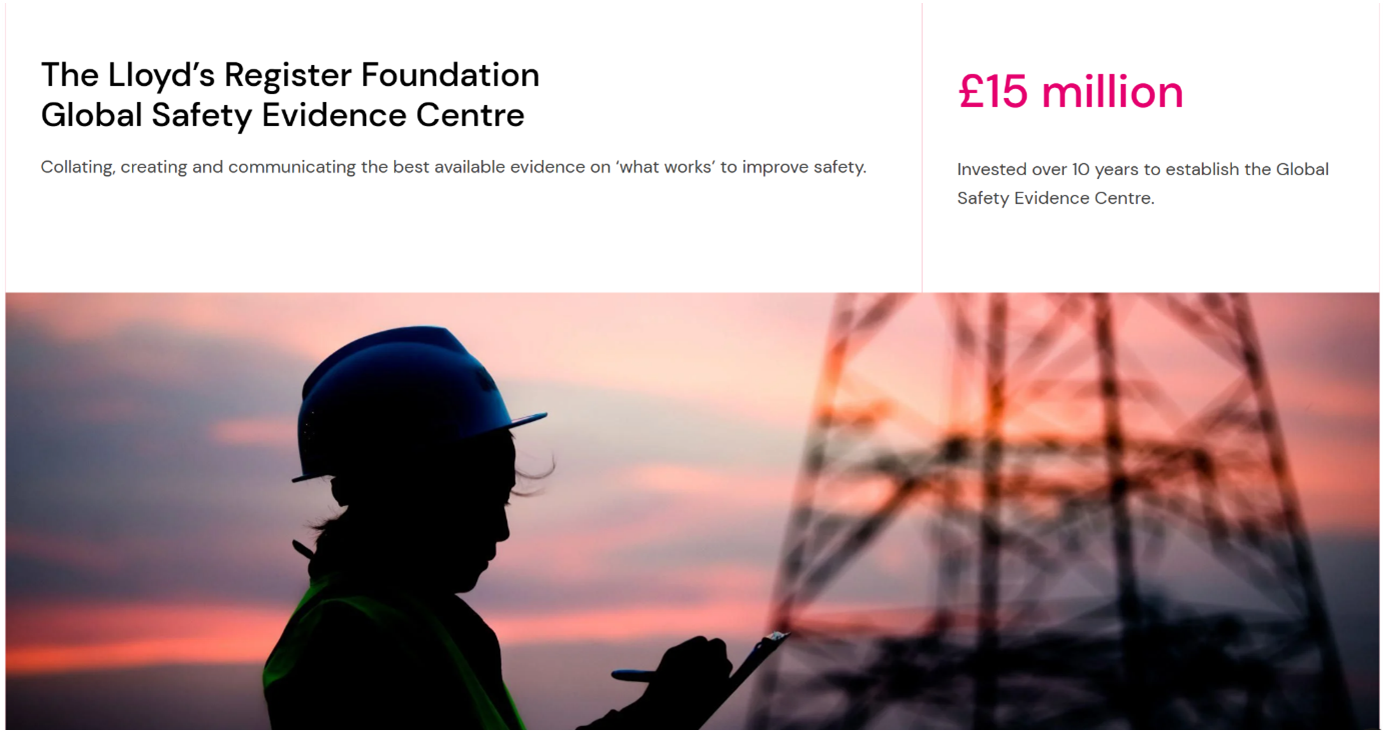
Launched in May 2025, the Lloyd’s Register Foundation Global Safety Evidence Centre constitutes an investment of £15 million over 10 years to support the generation, translation and use of global safety evidence. Initially, this is focused on two core programmes:
- Safe work: using evidence to promote safety in high-hazard industries, building on the Foundation’s World Risk Poll.
- Safety science: knowledge about safety and risk-related issues more broadly, and how to assess and manage them. This includes safety definitions and measures, as well as method development for safety research.
The Centre serves as a hub for anyone who needs to know ‘what works’ to make people safer. We work with locally connected evidence creators, intermediaries, and end users – especially occupational safety and health practitioners – to identify and fill gaps in the evidence and enable access to high-quality evidence that can inform action. This includes using the World Risk Poll – the first global study of people’s experiences and perceptions of risks to their safety – to track long-term trends and guide effective policy interventions.
Amplifying local voices to improve global safety
When evidence creation is led and guided by local voices, it helps make sure that the people most affected have the strongest say in identifying safety problems and finding solutions to make themselves safer.
The Africa maritime sector, for instance, presents both development opportunities and logistical and safety challenges. There is growing momentum behind the development of maritime infrastructure on the continent, the adoption of new technologies for the energy transition, and the extraction of natural resources to enable them. The same is true of the workforce. Seafarers are the backbone of the maritime industry, and Africa’s young talent is set to reshape the global maritime labour market. Getting safety standards right for workers across the continent is therefore essential for fully realising this potential.
To this end, we have supported the establishment of Ocean Centres in seven emerging ocean economies in 2025, two of which are located in Africa (Ghana and Kenya). Hosted by Country Networks of the UN Global Compact, these Centres are running a programme of workshops to understand where the most significant harm is happening and where risks may increase due to the adoption of new technologies or climate change impacts.
The Ocean Centres bring together diverse stakeholders to improve the safety of workers and infrastructure in ports, fishing, aquaculture, and offshore renewables. With new legislation in place and a national strategy in the works, the centre in Ghana is already convening cross-sectoral dialogues to shape the future of fisheries, aquaculture, and marine governance. In Kenya, where the blue economy employs over 500,000 people, the Centre is focused on small-scale fisheries, port operations, and disaster preparedness.
Generating and using evidence to build resilience in Africa
Another safety challenge facing Africa is how to build disaster resilience amid increasingly severe weather events driven by climate change. The 2024 World Risk Poll reveals an increase in people’s experiences of harm from severe weather events, and a fall in individual resilience, with more people globally feeling unable to protect themselves from future disasters. To move from this insight to action, a series of locally led projects funded by the Global Safety Evidence Centre is underway in the region.
For instance, we are funding the South African Weather Service to strengthen access to forecasts for disaster early warnings in low-income communities, working in partnership with the UK Met Office and academics.
Meanwhile in Ethiopia, the Global Network of Civil Society Organisations for Disaster Reduction are working with Light for Generation Ethiopia on a two-year project to develop community-led landslide resilience. In Mauritius, Zambia, and Ghana, the ICLEI Africa Secretariat is working to improve resilience and safety in the face of climate-induced disasters.
Our Global Safety Evidence Library
The Centre’s Evidence Library collates global evidence on safety, intended for anyone with an interest in improving safety outcomes to share and use to inform policy and practice. Recent publications include:
- A report on the impact of emerging technology on safety, highlighting how digital technologies can introduce new risks as well as how they can be used to keep workers safe.
- A report on the impact of climate change and safety at work, showing how climate change affects worker safety in different sectors around the world, and the existing evidence gaps.
- A report on findings around risk perception and experiences of those who work on or near water.
- A global dataset on household waste behaviour, with a report examining the risks and opportunities for countries in managing this.
We are currently working on two systematic reviews: 1) an in-house, mixed-methods systematic review to collate existing evidence on ‘what works’ in improving disaster early warning systems, and 2) a commissioned systematic review led by researchers at the Society of Occupational Medicine, which is aimed at assessing ‘what works’ for protecting the psychological safety of disaster first responders. These reviews aim to assess intervention effectiveness, the barriers and enablers to their successful implementation, and the experiences and views of populations regarding their usefulness and acceptability. We are keen to include ‘grey literature’ in these reviews, so we would like to hear from anyone doing research in this space.
Get in touch
The Global Safety Evidence Centre actively seeks to partner with and collaborate with Africa-based evidence creators, intermediaries, and end users, especially occupational safety and health practitioners. While the safety of people and communities is a universal ambition, the distinctiveness of each country or region means that safety challenges and opportunities can only be adequately understood through the participation of local stakeholders.
Contact us at gsec@lrfoundation.org.uk.
About the author:
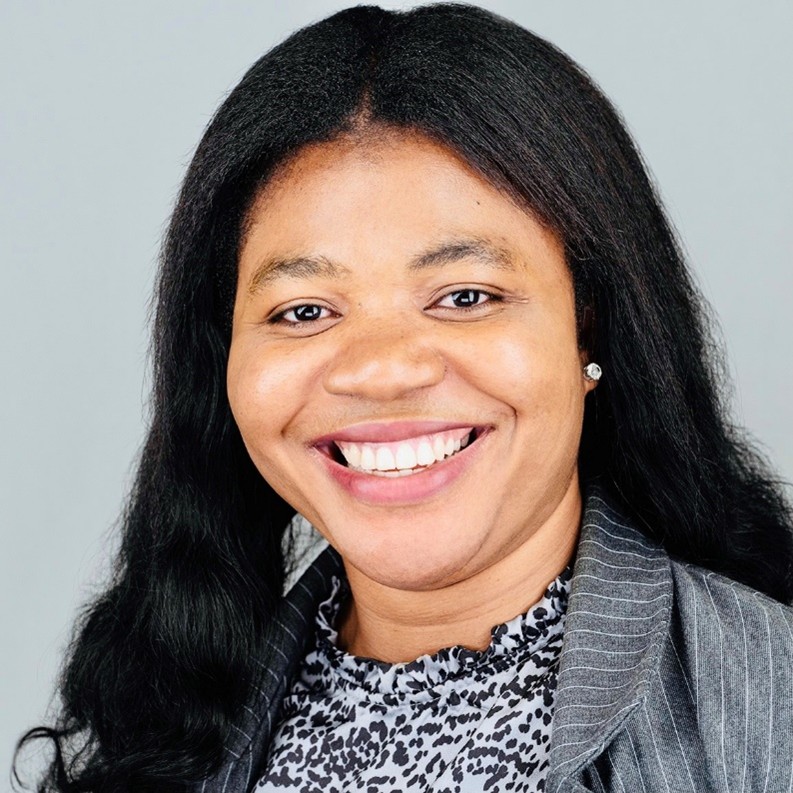
Dr Elizabeth Adjoa Kumah is a global leader in evidence-informed practice and policy, with expertise in evidence synthesis, knowledge translation, and public health and social care research. Elizabeth has bachelor’s and master’s degrees in nursing, and a PhD in evidence-informed practice. She is a Fellow of the UK Higher Education Academy.
With a background in adult nursing and healthcare delivery, Elizabeth is passionate about ensuring the safety and well-being of individuals and believes that to improve safety outcomes, it is necessary to apply the best available evidence to inform policy and practice decision-making. Over the past 15 years, Elizabeth has been actively engaged in researching, generating and translating evidence to support and shape social policy and practice internationally.
Elizabeth has conducted research and delivered public health interventions in several African countries (Ghana, Kenya, Nigeria and Tanzania), and in the UK. She has worked in teaching and research roles in various UK academic institutions and supervised and mentored several postgraduate and undergraduate students.
Elizabeth has also worked in senior roles within Evidence teams at the UK Health Security Agency and Foundations – the What Works Centre for Children and Families. In these roles, she led the production of high-quality evidence reviews to support government bodies in health and social care policy decision-making.
Currently, Elizabeth is the Reviews and Synthesis Manager at Lloyd’s Register Foundation, working within the Global Safety Evidence Centre where she leads the collation, synthesis and maintenance of high-quality evidence synthesis products. Elizabeth also holds honorary positions at the University of Liverpool and the Liverpool School of Tropical Medicine, where she teaches postgraduate and undergraduate students evidence synthesis methodologies, evidence-based practice, and supervises PhD students.
Email: Elizabeth.Kumah@lrfoundation.org.uk
Organisation: Lloyd’s Register Foundation; Profile: Dr Elizabeth Adjoa Kumah
Twitter: @KumahElizabeth
LinkedIn: Dr Elizabeth Kumah, PhD
Acknowledgements: The authors are solely responsible for the content of this article, including all errors or omissions; acknowledgements do not imply endorsement of the content. The author is grateful to Charity Chisoro for her guidance in preparing and finalising this article, as well as her editorial support.
Disclaimer: The views expressed in published blog posts, as well as any errors or omissions, are the sole responsibility of the author/s and do not represent the views of the Africa Evidence Network, its secretariat, advisory or reference groups, or its funders; nor does it imply endorsement by the aforementioned parties.
Suggested citation: Kumah, EA (2026) The Lloyd’s Register Foundation Global Safety Evidence Centre: building and sharing evidence to improve safety. Blog posting on 20 February 2026. Available at: https://africaevidencenetwork.org/the-lloyds-register-foundation-global-safety-evidence-centre-building-and-sharing-evidence-to-improve-safety/2026/02/20/