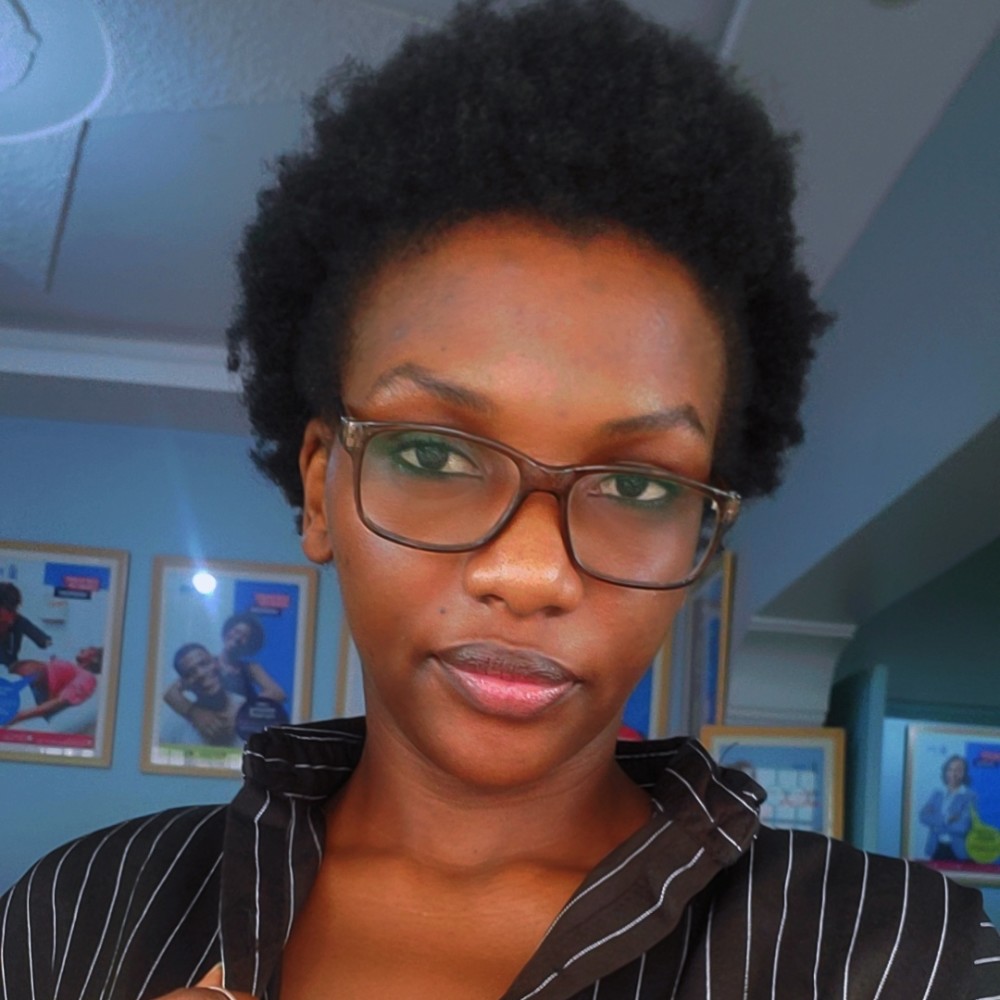
…a new individual! Hilda Abago recently joined the Africa Evidence Network (AEN) because she believes evidence should shape decisions that affect people’s lives across Africa. Too often, policy and practice are driven by opinion, tradition, or short-term politics, while rigorous research sits unused on shelves. AEN’s mission to connect people who produce, share, and use evidence directly addresses that gap, and Hilda wanted to be part of that work.
Hilda has a background in research, policy, communication, and data, and she has seen firsthand how difficult it is for evidence to reach the people who need it. Researchers publish in journals that policymakers never read. Policymakers make urgent decisions without time to find relevant studies. Practitioners on the ground lack access to both. The AEN stands out because it builds bridges between these groups through practical tools, events, and networks that make evidence usable and accessible in African contexts.
Hilda was also drawn to AEN’s emphasis on collaboration over competition. The network brings together universities, government departments, NGOs, and civil society across the continent, creating space for honest dialogue about what works, what doesn’t, and why. That kind of cross-sector learning is rare, and it’s exactly what’s needed to improve health, education, governance, and economic outcomes in the region.
Another reason is AEN’s focus on strengthening local evidence ecosystems. Instead of importing solutions, the network supports African researchers and institutions to lead evidence production and use. That aligns with her view that sustainable change comes when local capacity is built and respected.
Finally, Hilda joined the AEN community because it connects her with peers who are tackling similar challenges, often with fewer resources but more creativity. Being part of that community keeps her motivated, accountable, and exposed to new methods and perspectives she wouldn’t encounter working in isolation.
In short, Hilda joined the AEN to help close the gap between knowledge and action in Africa. She wants her work to contribute to decisions that are informed, transparent, and ultimately better for the people they’re meant to serve.


