

Across Africa, evidence-informed decision-making (EIDM) is increasingly recognised as essential to building resilient public institutions. Yet some sectors remain largely invisible within national policy conversations. Prisons are one such blind spot. In Ghana, correctional facilities sit at the intersection of justice, health, and security, but rarely feature in climate adaptation planning or public health reforms.
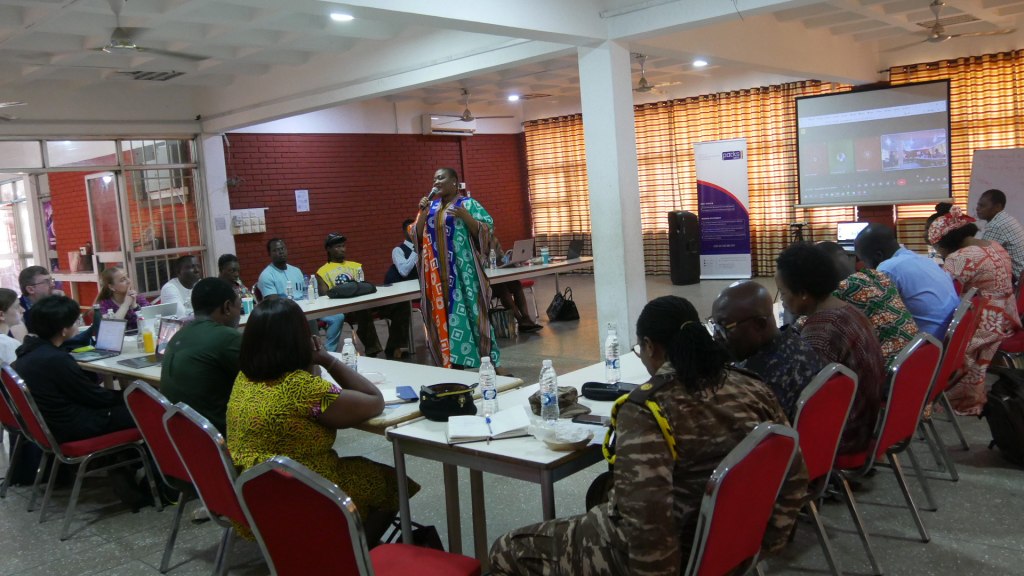
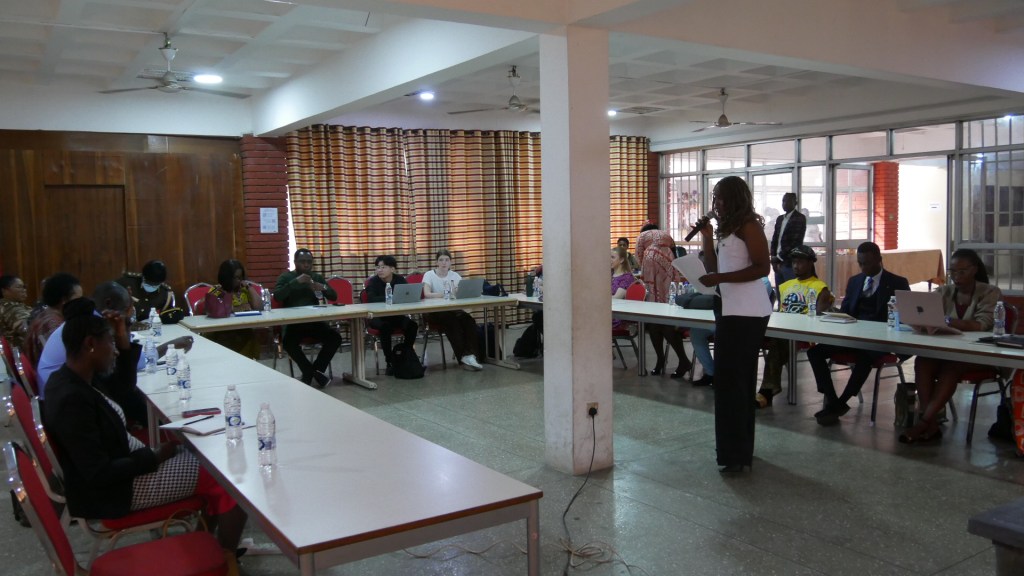
On 30 January 2026, stakeholders from justice, health, finance, civil society, and research institutions convened at CSIR-Institute of Industrial Research (CSIR-INSTI) for a roundtable dialogue on climate change, health, and security within Ghana’s prison system. The meeting, convened by PACKS Africa in partnership with the Ghana Prisons Service, the University of Southampton, and the University of Health and Allied Sciences (UHAS), was held under the Chatham House Rule to encourage candid reflection. Participants are therefore not identified in this blog, and views shared are not attributed to individuals or institutions.
The Climate–Health–Security Nexus Behind Bars
The discussion began with a scene-setting evidence brief highlighting a stark reality. While Ghana recognises climate change as a national priority, its implications for prisons remain largely unexamined. This gap is significant.
Prisons in Ghana were built decades ago, often during the colonial period, and were not designed for rising temperatures, erratic rainfall, or prolonged drought. Minimum international standards require approximately four square metres per prisoner, excluding sanitary space, yet some facilities operate far beyond intended capacity. Overcrowding, inadequate ventilation, and ageing infrastructure intensify heat stress and create fertile ground for communicable diseases.
Climate stressors amplify existing vulnerabilities. Rising temperatures increase the risk of skin infections and heat-related illnesses. Water scarcity undermines sanitation. Flooding damages infrastructure and heightens the risk of disease transmission. Because prison health systems depend heavily on external public health facilities, pressure on the broader health system translates into delayed or limited care for inmates.
The risks extend beyond prison walls. Staff return home daily. Inmates are released back into communities. Infectious disease outbreaks within prisons can quickly become public health concerns. In this sense, prison climate resilience is not a niche human rights issue. It is a national development concern.
Why Evidence Struggles to Shift Practice
Participants mapped the political economy of prison governance. Responsibility for prison welfare formally lies with the Ghana Prisons Service, yet budgetary control and climate policy direction sit elsewhere. The Ministry of the Interior oversees the Service but balances multiple security priorities. The Ministry of Health and Ghana Health Service manage national health systems, yet prison populations remain marginal in routine data systems. Environmental oversight bodies rarely inspect correctional facilities. Parliamentary attention tends to focus more on security than climate resilience or health systems strengthening.

This fragmentation illustrates a core EIDM challenge in Africa. Evidence does not automatically translate into action when authority, incentives, and resources are distributed across institutions.
Frontline officers described working within tight fiscal and infrastructural constraints. Regional commanders have limited discretion over capital investments. Health staff operate within hierarchical systems marked by chronic understaffing. Data exists within the prison system, but integration with national climate and health datasets is weak. Without interoperable data systems, prisons remain peripheral in national planning frameworks.
Lived Realities and Divergent Experiences
Applying the Chatham House Rule allowed participants, including individuals with lived prison experience, to speak candidly.

Experiences varied significantly across facilities. Some prisons, notably smaller or specialised institutions, were described as relatively orderly, with regular meals and access to basic healthcare. Others, with extensive urban facilities, face acute overcrowding. One contributor recounted a cell built for 20 people that accommodated nearly double that number. Another pointed to persistent bedbug infestations and limited ventilation despite the presence of fans.
Gender differences also emerged. Female facilities were described as comparatively less congested and cleaner, with access to antenatal care and baby-friendly units. Male prisons appeared more prone to overcrowding-related health issues, including skin diseases. These distinctions underscored the need to disaggregate data rather than generalise across the entire prison estate.
Legal bottlenecks further compound congestion. Participants noted cases of individuals detained for minor offences or unable to pay fines, as well as pre-trial detainees awaiting legal representation. Periodic presidential amnesties and legal aid interventions provide temporary relief, but inflows often outpace releases.
For EIDM practitioners, this points to a systems problem. Climate resilience cannot be addressed without engaging sentencing regimes, access to legal aid, and broader criminal justice reforms.
Financing and the Politics of Possibility
A striking moment in the dialogue concerned climate finance. Representatives familiar with national and international funding mechanisms indicated that resources exist, through instruments such as the Green Climate Fund and the Adaptation Fund, to support adaptation initiatives. Yet prisons are rarely positioned within proposals.

This reveals another EIDM lesson. Civil society actors proposed the digitalisation of health records, pilotable interventions such as tree planting, improved ventilation, and indoor greenery to enhance air quality, and climate-sensitive infrastructure upgrades. Others emphasised the need for climate budget tagging within the justice sector to make expenditures visible and trackable.
However, participants cautioned that reform requires trust and co-creation. Prison authorities expressed concern about external actors implementing projects without sustained engagement. Researchers stressed the need for feasibility studies and rigorous analysis before scaling interventions.
Three EIDM Imperatives for Africa
The roundtable concluded not with definitive solutions, but with three broad imperatives relevant beyond Ghana.
- First, mainstream climate into overlooked sectors. Climate adaptation plans must account for custodial institutions. Ignoring prisons undermines both human rights and public health resilience.
- Second, integrate data systems. Without reliable, disaggregated data linking prisons to national health and climate datasets, policymakers cannot assess risks or allocate resources effectively.
- Third, align authority with accountability. Institutions tasked with implementation require fiscal space and policy backing to act. Parliamentary oversight, ministerial coordination, and cross-sector collaboration are essential.

For Africa’s EIDM community, Ghana’s experience offers a reminder that evidence must move beyond reports and into institutional incentives, financing frameworks, and governance structures. Climate change is reshaping risk landscapes across the continent. Ensuring that prisons are not left behind will require deliberate, coordinated, and evidence-informed action.
About the author: Divine Adongo is a Strategic Communications Specialist at PACKS Africa, an Emerging Public Leaders Fellow, and President of the Centre for Contemporary Pan-Africanism. He is currently pursuing a Bachelor of Laws. He holds a Higher National Diploma in Media and Communications Studies from Tamale Technical University, a Bachelor of Arts in Communications with a specialisation in Public Relations, and a Master of Arts in Political Communications Management from the University of Media, Arts, and Communications (UniMAC). His interests include writing, law, diplomacy, policy, politics, and governance.
Acknowledgements: The author is solely responsible for the content of this article, including all errors or omissions; acknowledgements do not imply endorsement of the content. The author is grateful to Kirchuffs Atengble for his guidance in preparing and finalising this article, as well as his editorial support.
Disclaimer: The views expressed in published blog posts, as well as any errors or omissions, are the sole responsibility of the author/s and do not represent the views of the Africa Evidence Network, its secretariat, advisory or reference groups, or its funders; nor does it imply endorsement by the afore-mentioned parties.
Suggested citation: Adongo, D. (2026) From Cells to Systems: Using Evidence to Climate-Proof Ghana’s Prisons. Blog posting on 20 February 2026. Available at: https://africaevidencenetwork.org/from-cells-to-systems-using-evidence-to-climate-proof-ghanas-prisons/2026/02/20/
