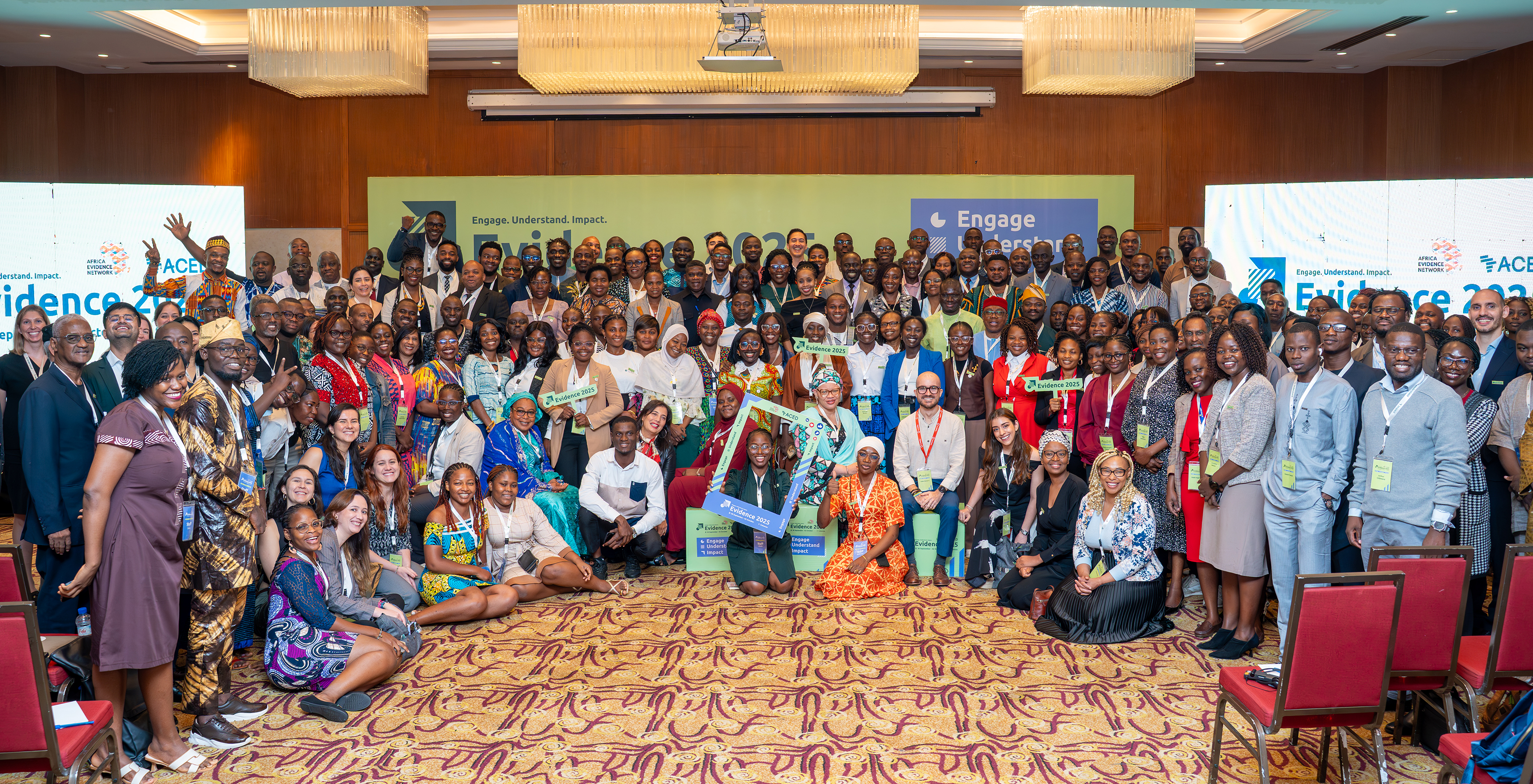
The Evidence 2025 event in Cotonou, Benin, brought together knowledge brokers, practitioners, policymakers, and other stakeholders to advance knowledge, deepen engagement, and enhance collaboration in evidence-informed decision-making (EIDM). Co-hosted with the African Center for Equitable Development (ACED), it was our largest event yet, with over 250 delegates in attendance in person and an additional 100 registered online participants. These participants hailed from over 40 African countries, a dedicated Latin American & Caribbean delegation to foster South-South collaboration, as well as a range of international guests. We also had over 50 youth delegates showcasing the bright future of EIDM in Africa.
The three-day event covered various themes, including navigating EIDM use cases in Africa, effective knowledge translation, valuing evidence differently, and enhancing youth participation and leadership in EIDM interventions. It was designed through a record number of content submissions, with over 150 submissions received for inclusion in the programme!
Highlights from the Three-Day Event
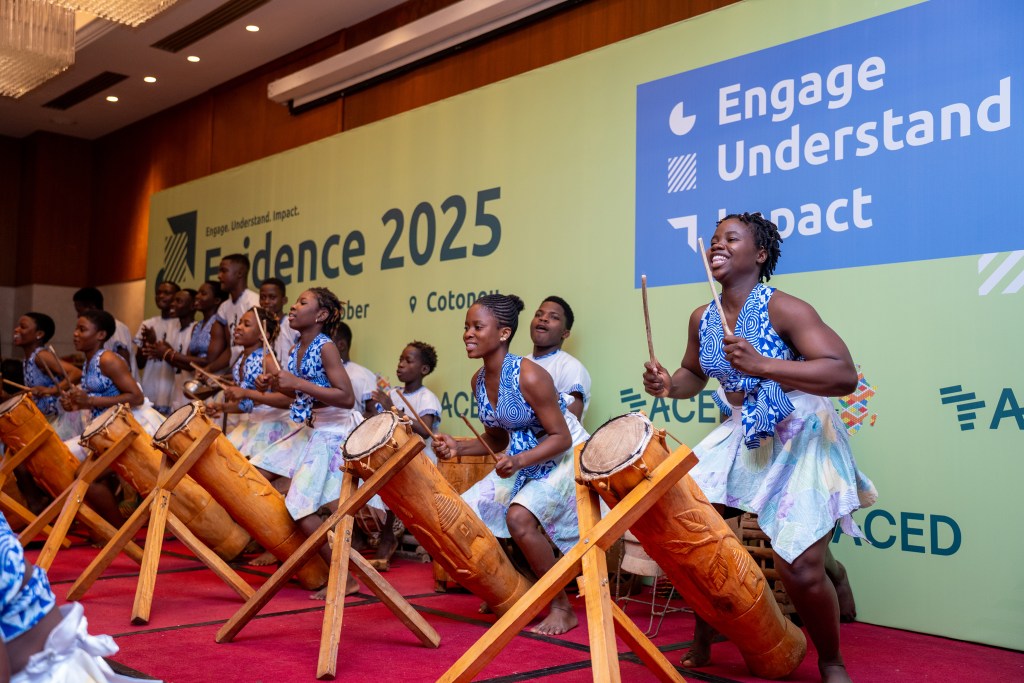
Day 1 of the event began with a welcome session and a leadership panel discussion on “The Future of Evidence-Informed Policy in Africa.” Key topics included the establishment of an African Data, Evidence, and AI Infrastructure through collaboration and robust data governance, as well as practical applications and capacity development for EIDM. The critical role of EIDM in transforming policy design and implementation was highlighted with examples from various African countries. Strategies to enhance training and mentorship programs in EIDM were also explored. One of the major highlights of Day 1 was the gala dinner, which included a range of performances showcasing the rich Benin culture as well as the ceremony for the 10 Africa Evidence Leadership Awards.
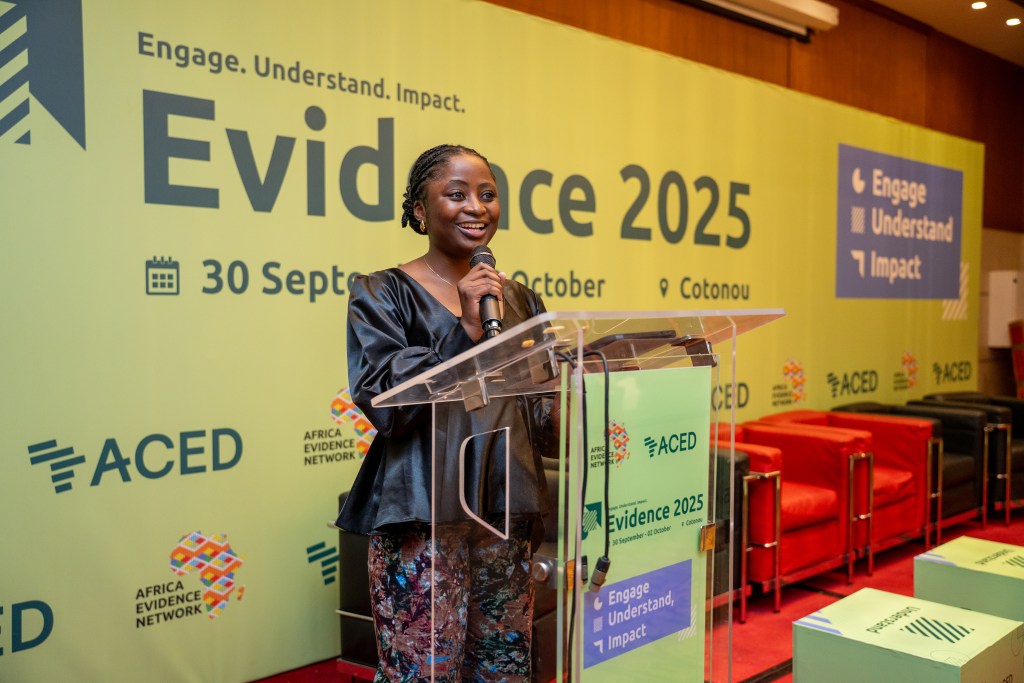
Day 2 focused on innovative approaches to EIDM, showcasing solutions such as the Rapid Evidence Synthesis Platform and the Responsive Evidence Hub. Discussions included capacity development for EIDM, youth-led initiatives, and evidence-to-policy training programmes. The importance of tailoring data to meet population needs and addressing structural challenges for youth employment in Africa was emphasised. Furthermore, there was a call to rethink traditional policy briefs in order to enhance the impact of knowledge translation in the region. A major highlight of the second event dinner was the keynote address and presentation of the Youth League Manifesto by the incoming Youth Chair, Penka Marthe Bogne, as well as Andile Madonsela’s reflections on the first two years of the Africa Evidence Youth League.
On the final third day, discussions centred on valuing evidence differently, with a focus on gender, youth, and equity in inclusive decision-making. Panels highlighted challenges and solutions in utilising evidence for decision-making, with dedicated highlights from the AELA winners. The event’s closing ceremony featured the unveiling of the new AEN Council of Chairs, led by Dr Rhona Mijumbi, and a celebration of Siziwe Ngcwabe’s stellar 8-year leadership of the AEN.

The AEN exhibition stand, EIDM Capacity Sharing Manifesto, and EIDM Innovation Hub were highlights throughout the event, as were the social activities organised post the event closing.
Key Conference Takeaways
- Collaboration and knowledge sharing: Essential for advancing African EIDM.
- Practical approaches and capacity development: Crucial for supporting and institutionalising EIDM in Africa.
- Effective knowledge translation: Requires understanding stakeholders, contextualising recommendations, and supporting implementation.
- Youth leadership and empowerment: Critical for shaping the future of evidence-informed Africa.
- Citizen engagement and power dynamics: Prioritising citizen involvement, ensuring relevant evidence, and addressing power imbalances are essential for informed decision-making.
Way Forward
Building on the momentum from Evidence 2025, our collective efforts should focus on fostering impactful knowledge translation, promoting collaboration, and empowering youth to drive meaningful change in Africa, ultimately creating a future where evidence informs decision-making.
