If you are interested in this topic, review the presentation, read more in the blog post, or watch the recorded webinar.
We successfully hosted an engaging and interactive learning webinar on the Manifesto Innovation Challenge, bringing together diverse voices from across the continent to reflect on innovation in evidence-informed decision-making (EIDM).
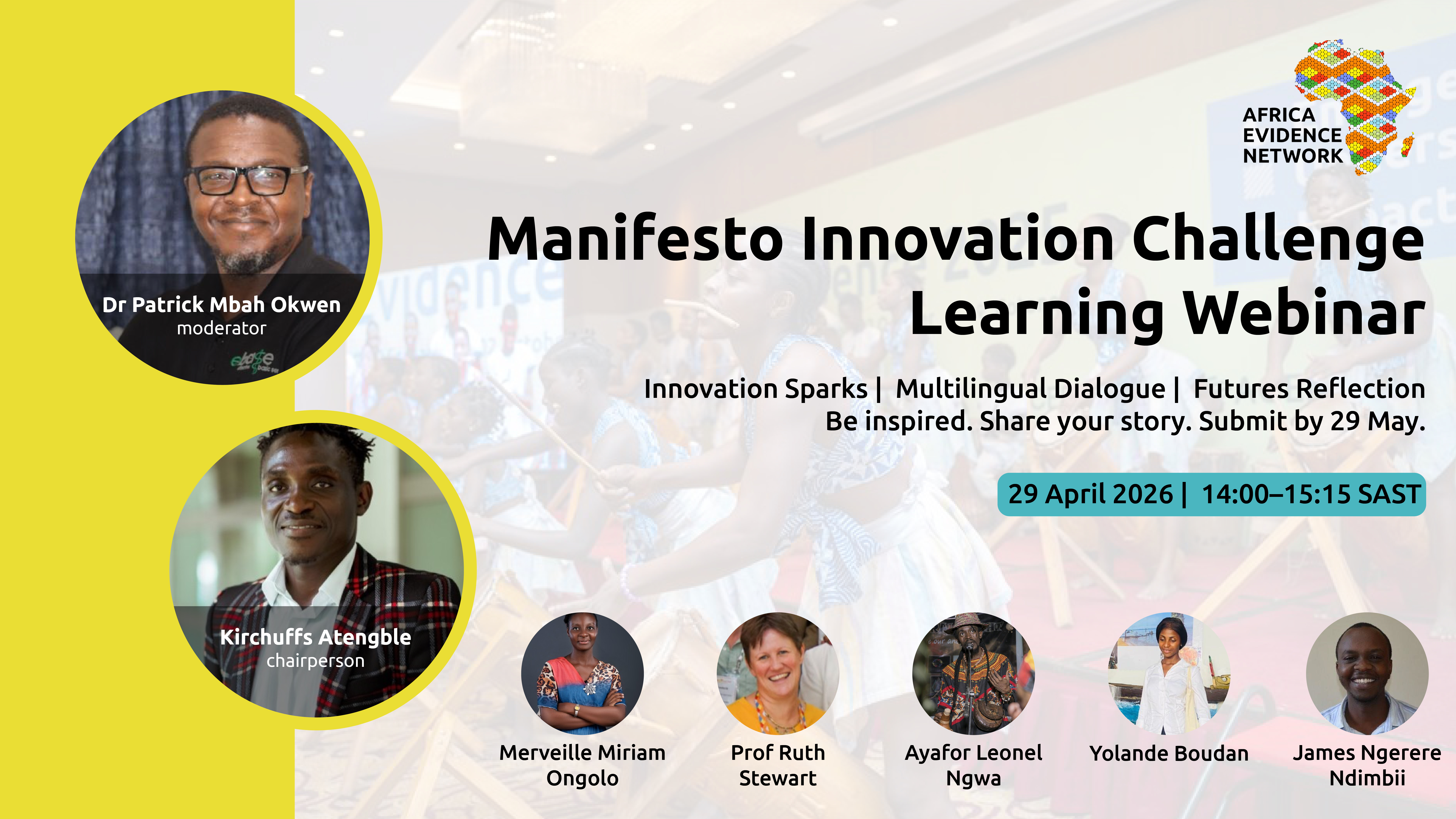
📅 Date: Wednesday, 29 April 2026
🕒 Time: 14:00–15:15 SAST | 15:00–16:15 EAT | 13:00–14:15 WAT | 12:00–13:15 GMT
The session built on earlier information-sharing efforts and created space for deeper reflection, peer learning, and exchange of practical experiences. Participants explored how innovation can be understood and applied within African contexts, particularly through the lens of the AEN Manifesto.
The webinar was chaired by Kirchuffs Atengble (Founding Director, PACKS Africa) and moderated by Dr Patrick Okwen (Team Lead, eBASE Africa). It featured rich contributions from a diverse panel of speakers, including:
- Ruth Stewart (Director, Alliance for Living Evidence – ALIVE)
- James Ngerere Ndimbii (Evidence Uptake and Learning Manager, Sightsavers)
- Yolande Boudan (Storyteller and Researcher, eBASE Africa)
- Ayafor Lionel Ngwa (Storyteller, eBASE Africa)
- Merveille Ongolo (Researcher, eBASE Africa)
Speakers shared thought-provoking insights and practical examples, highlighting key themes such as:
- Authentic partnerships as a driver of impact, emphasising collaboration, trust, and long-term relationships in strengthening evidence ecosystems
- Inclusive evidence uptake and learning systems, demonstrating how structured tools and processes can improve how evidence is generated, shared, and used in policy and practice
- Contextualised and culturally grounded innovation, rooted in African identities, languages, and knowledge systems
- Community-centred approaches, including the importance of co-creation and community diagnosis in designing meaningful and sustainable interventions
- Linguistic inclusivity, reinforcing the value of bilingual engagement and ensuring that diverse voices across Anglophone and Francophone communities are heard
The session also encouraged active participation, with attendees contributing reflections on how efficiency and innovation are defined in their own contexts and sharing ideas on what African-led innovation could look like by 2030. Discussions highlighted the importance of aligning innovation with local realities, integrating indigenous knowledge systems, and engaging responsibly with emerging technologies such as AI.
This webinar reaffirmed that innovation in Africa is not only about new ideas but also about reimagining existing practices through collaboration, inclusivity, and context-sensitive approaches.
Participants left with practical insights to inform their submissions, a stronger sense of community, and renewed motivation to contribute to the challenge.
Submissions close on 29 May 2026, with selected innovations to be recognised during Africa Evidence Week 2026.


